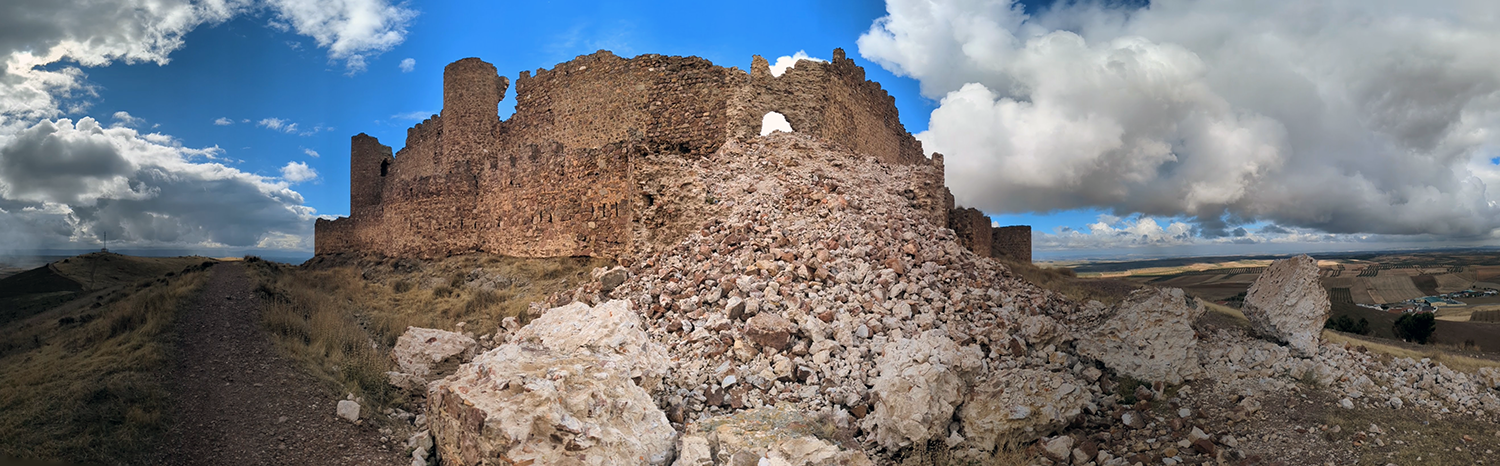
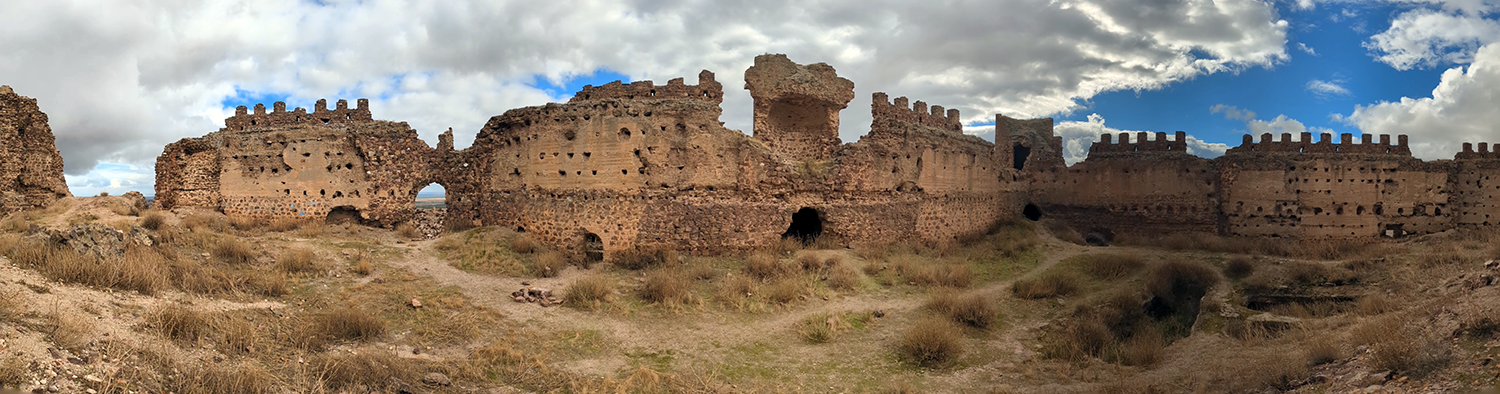
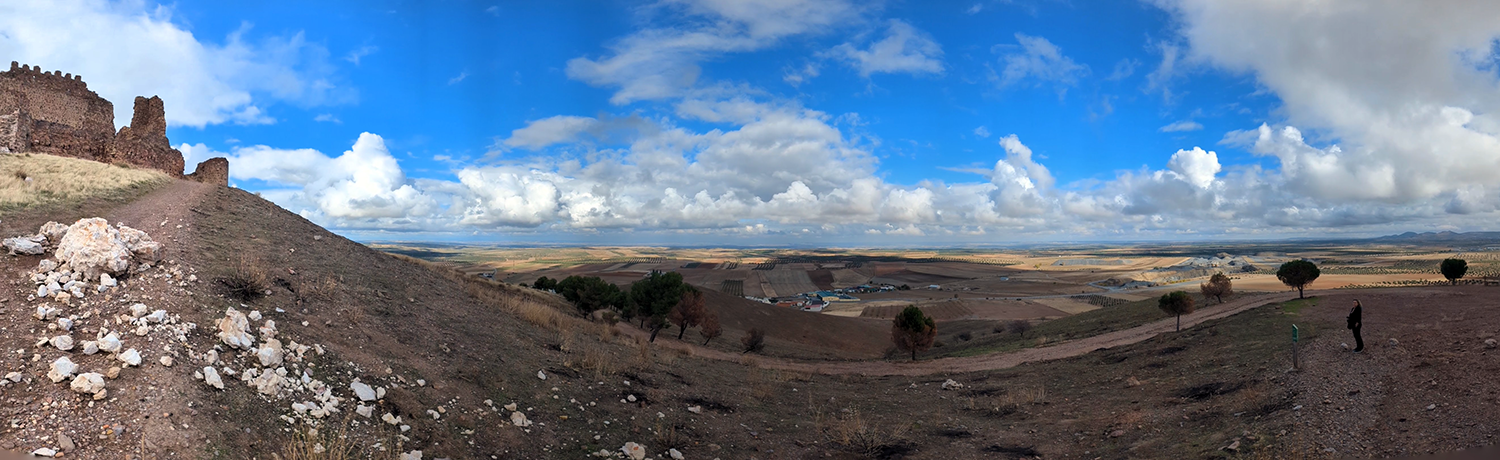
After leaving Toledo on Monday, Marion and I were traveling to Consuegra (where we hoped to see Don Quixote’s windmills). As we motored down Spain’s CM-42, I happened to spot a castle on a hill up ahead.
No big whoop. Just a 1,200-year-old castle. There wasn’t even a sign or anything.
“Should we get off the highway and take a look?” Marion Googled it and her magic pocket box said was closed. “Let’s check it out anyway,” I said, and pulled off towards the tiny village of Almonacid.
It was early afternoon and the town looked deserted. Literally no one around. The one grocery store was closed for siesta. Feeling just a bit foolish, we crawled through streets lined with cracker-box cars and found a place to park.
There was an ancient guard house flanking a rutted dirt road. After taking some photos, we started to climb—fully expecting to reach the top only to find rows of barbed wire and “KEEP OUT” signs.
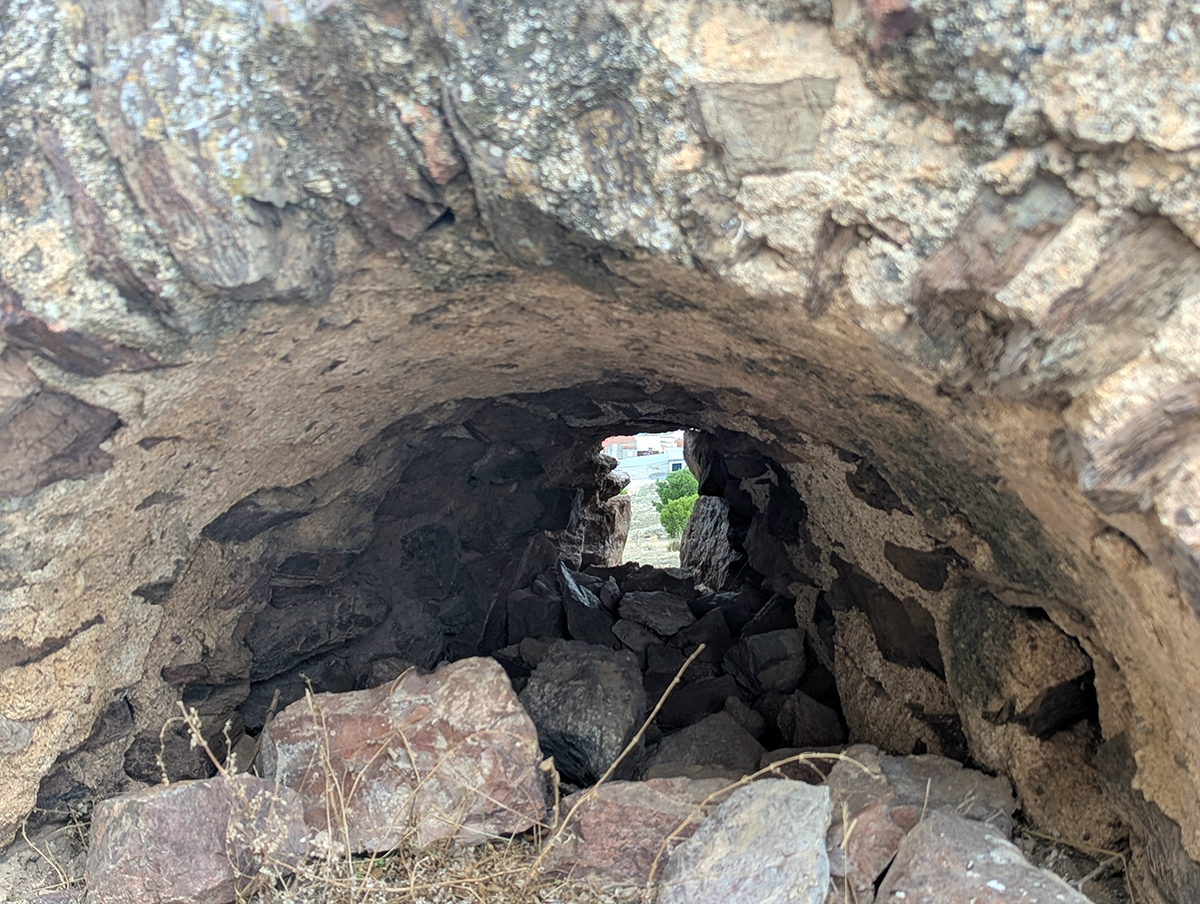
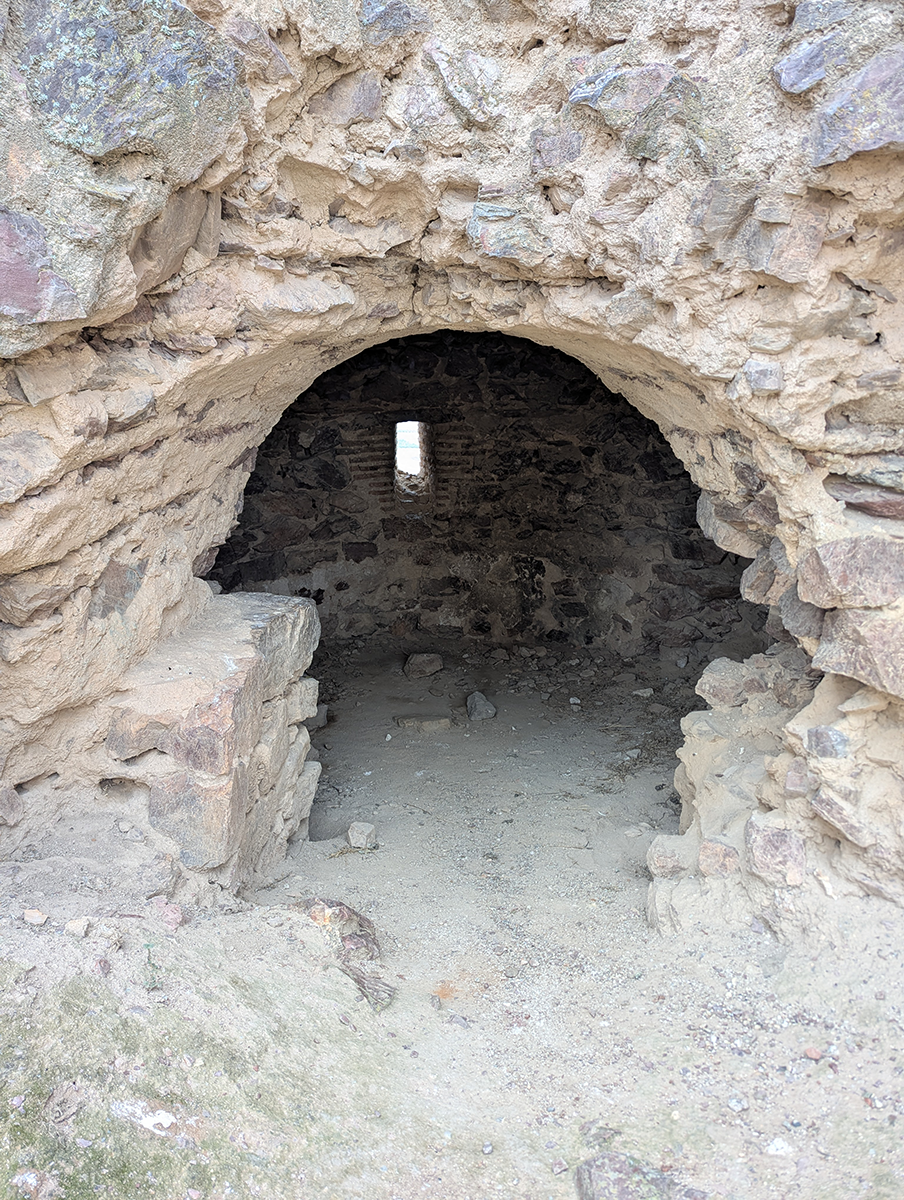
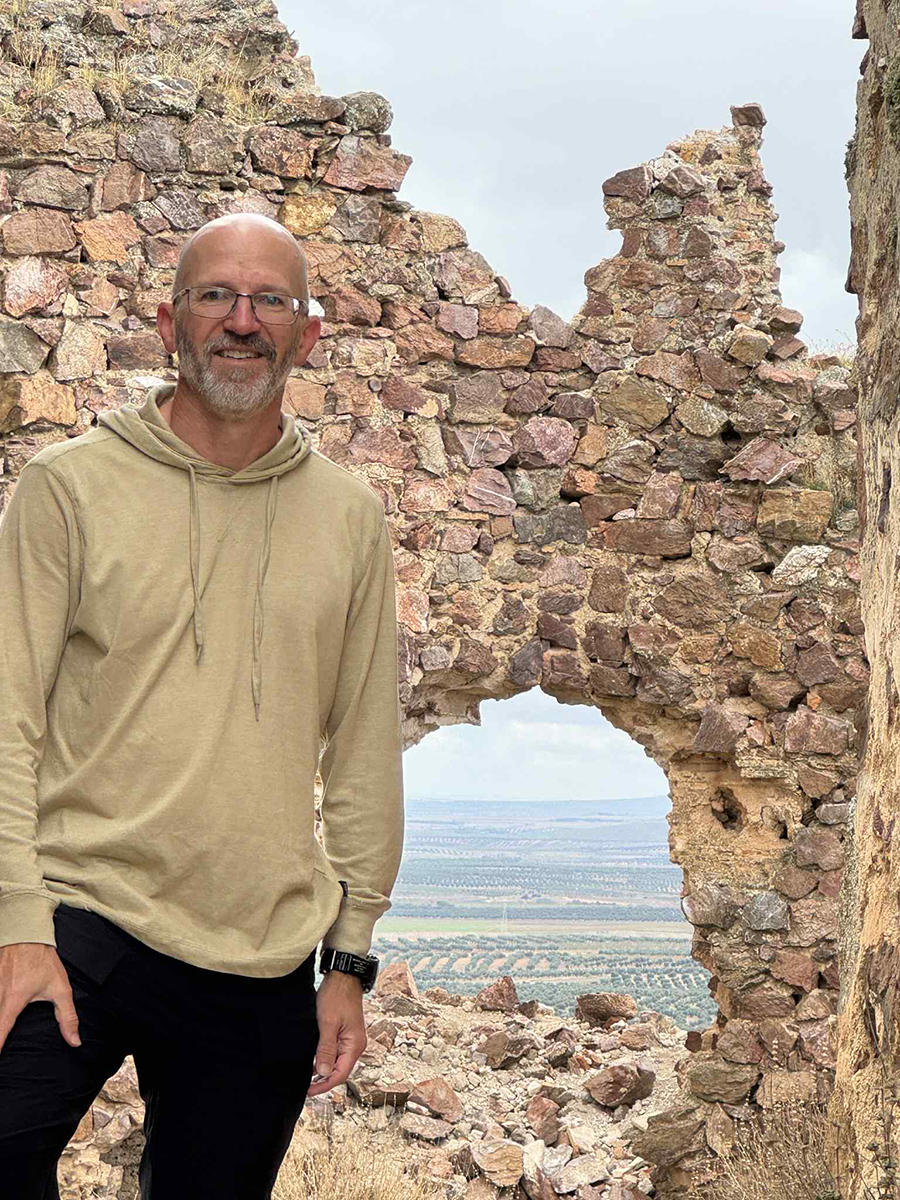
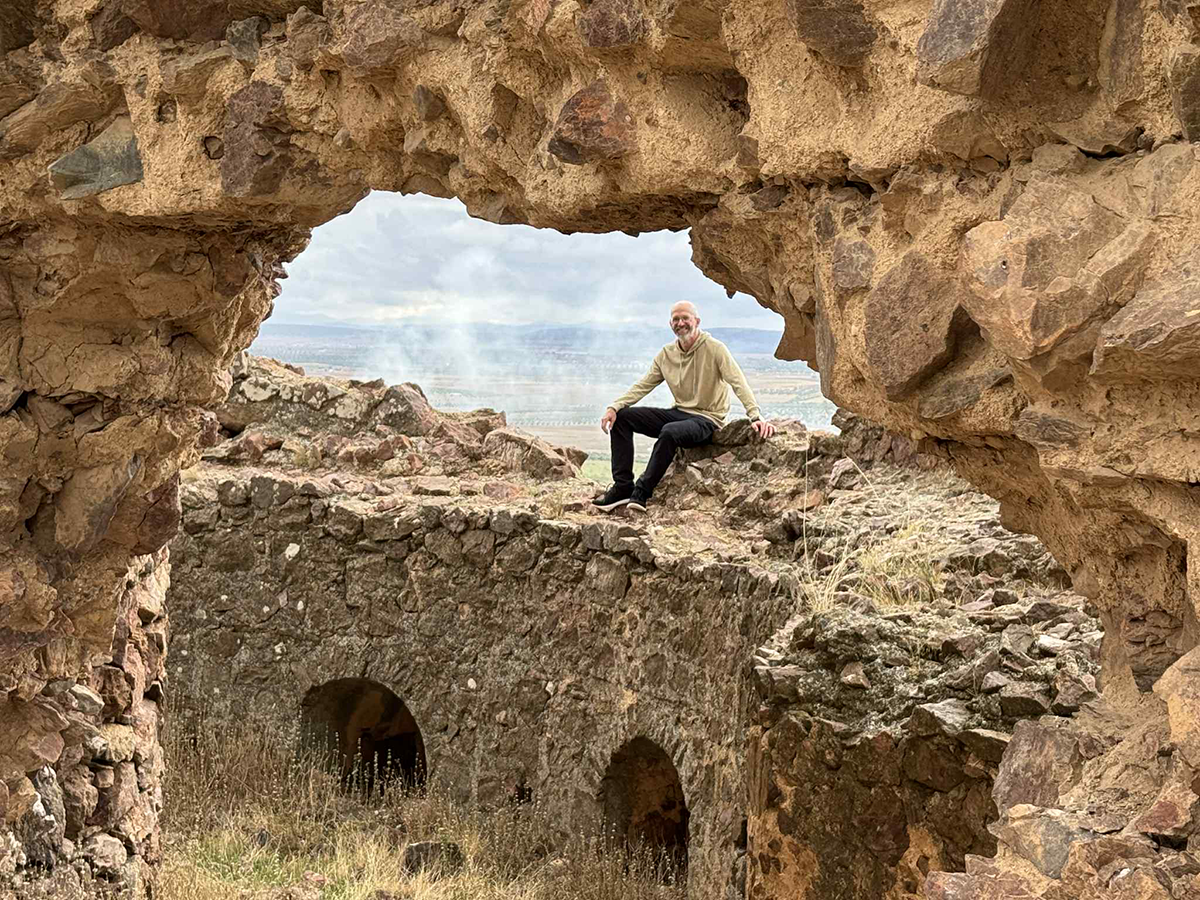
Nope. On the crown of the hill was a ruined castle, crenellated walls surrounding a central keep, fully accessible to anyone who wanted to explore it. Scaling a section of collapsed wall gave us access to the inside, including the fortified keep and interior turrets. We spent well over an hour crawling around and taking pictures, marveling at the access we had to such an amazing structure.
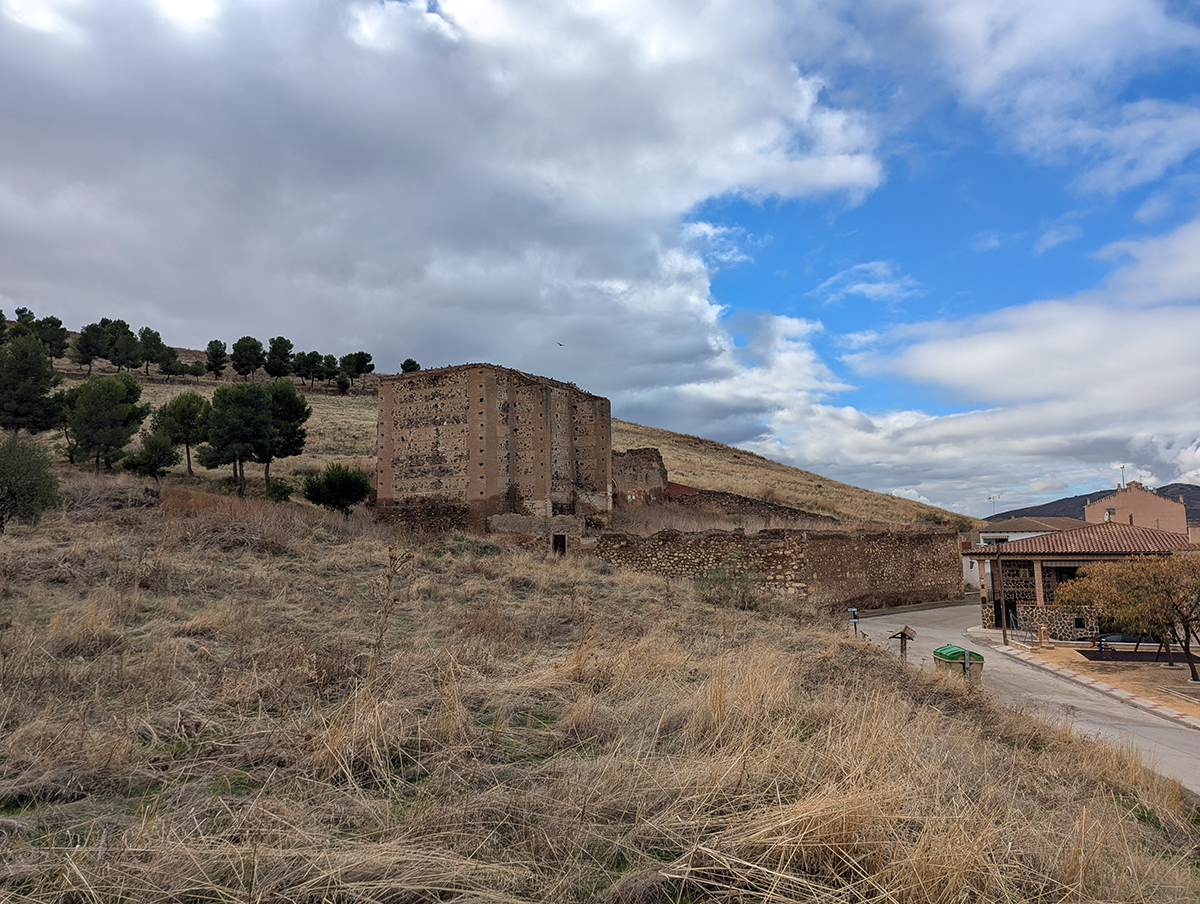
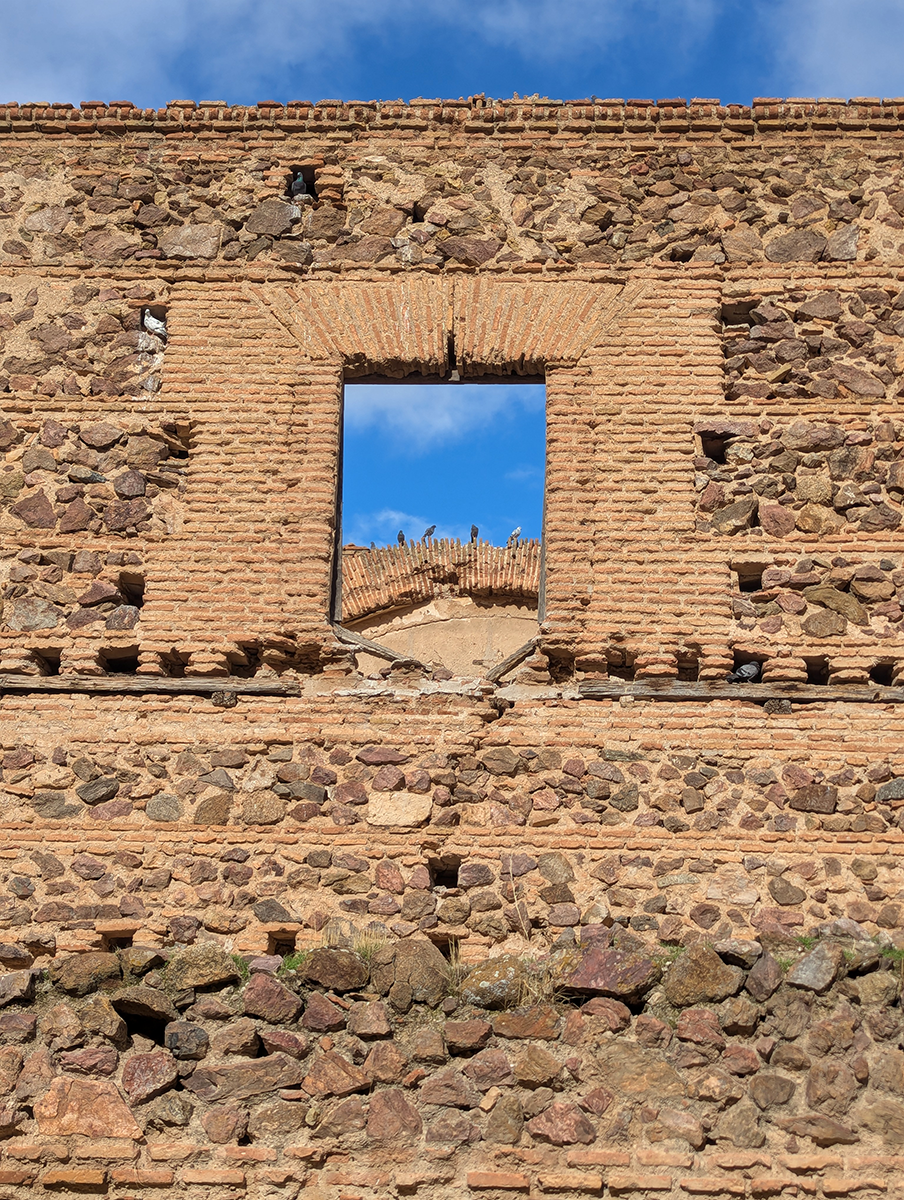
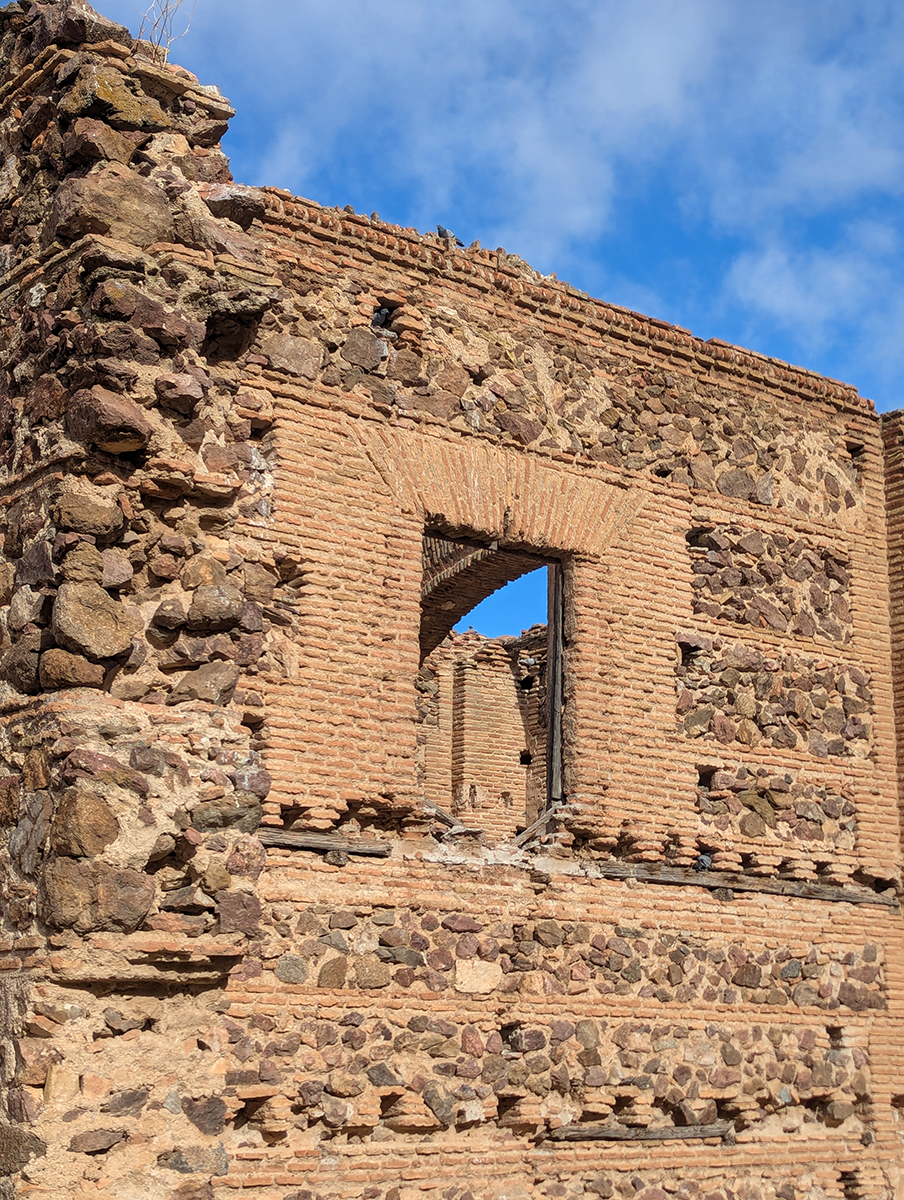
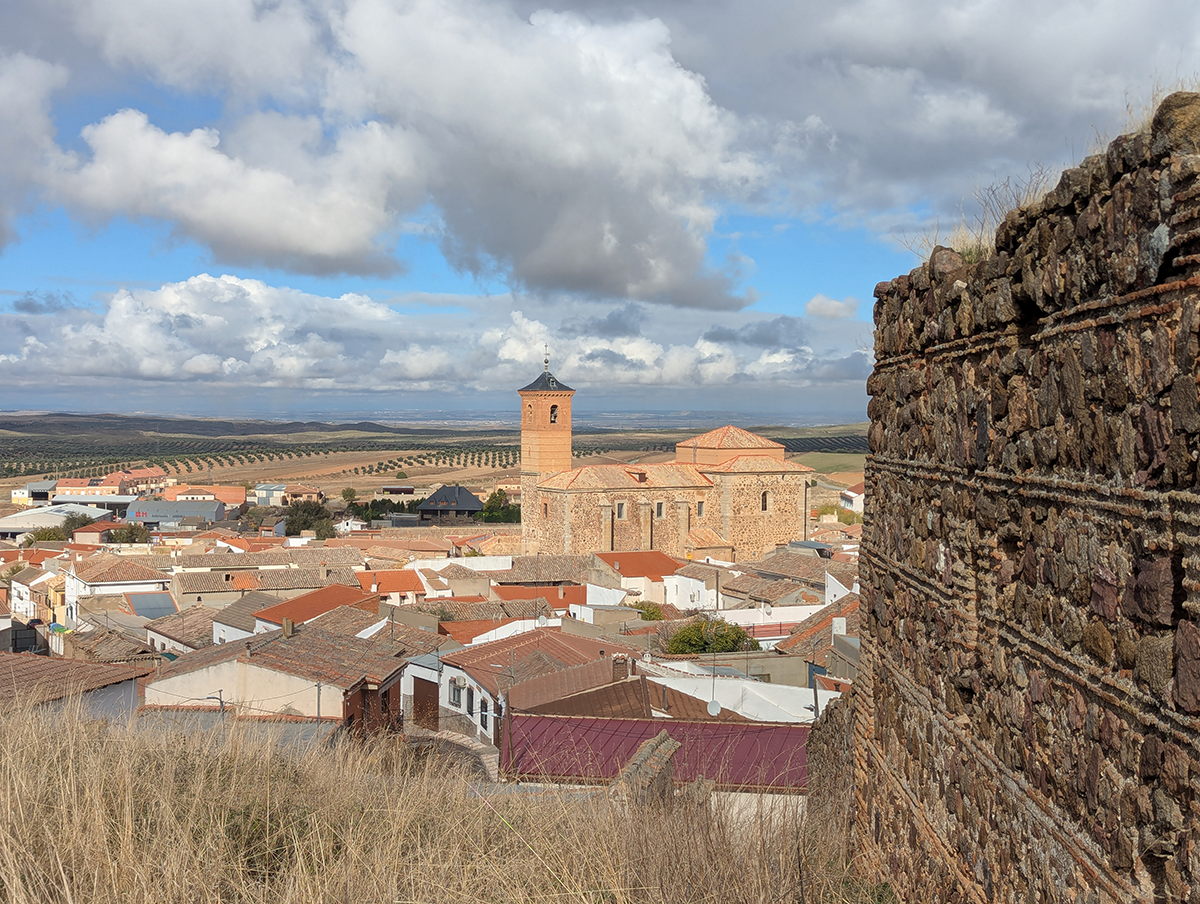
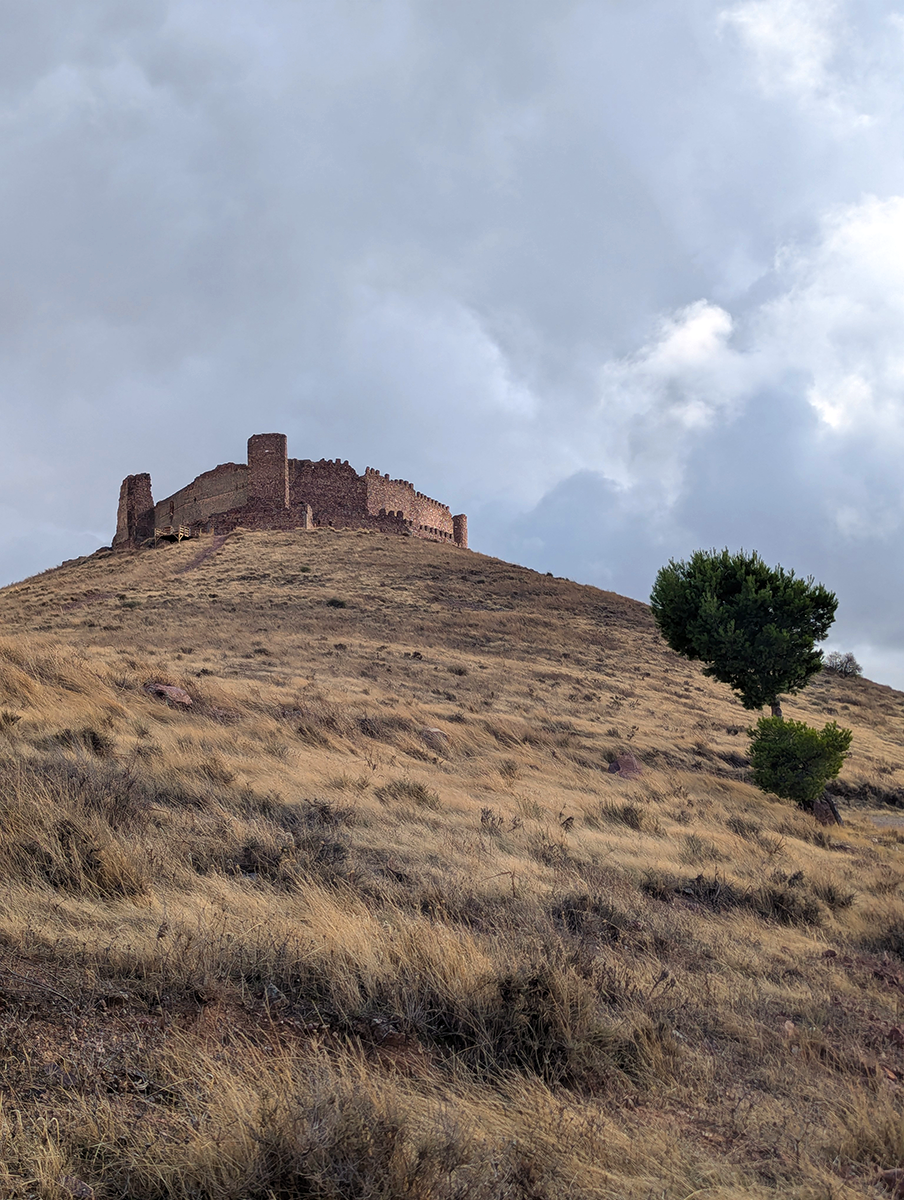
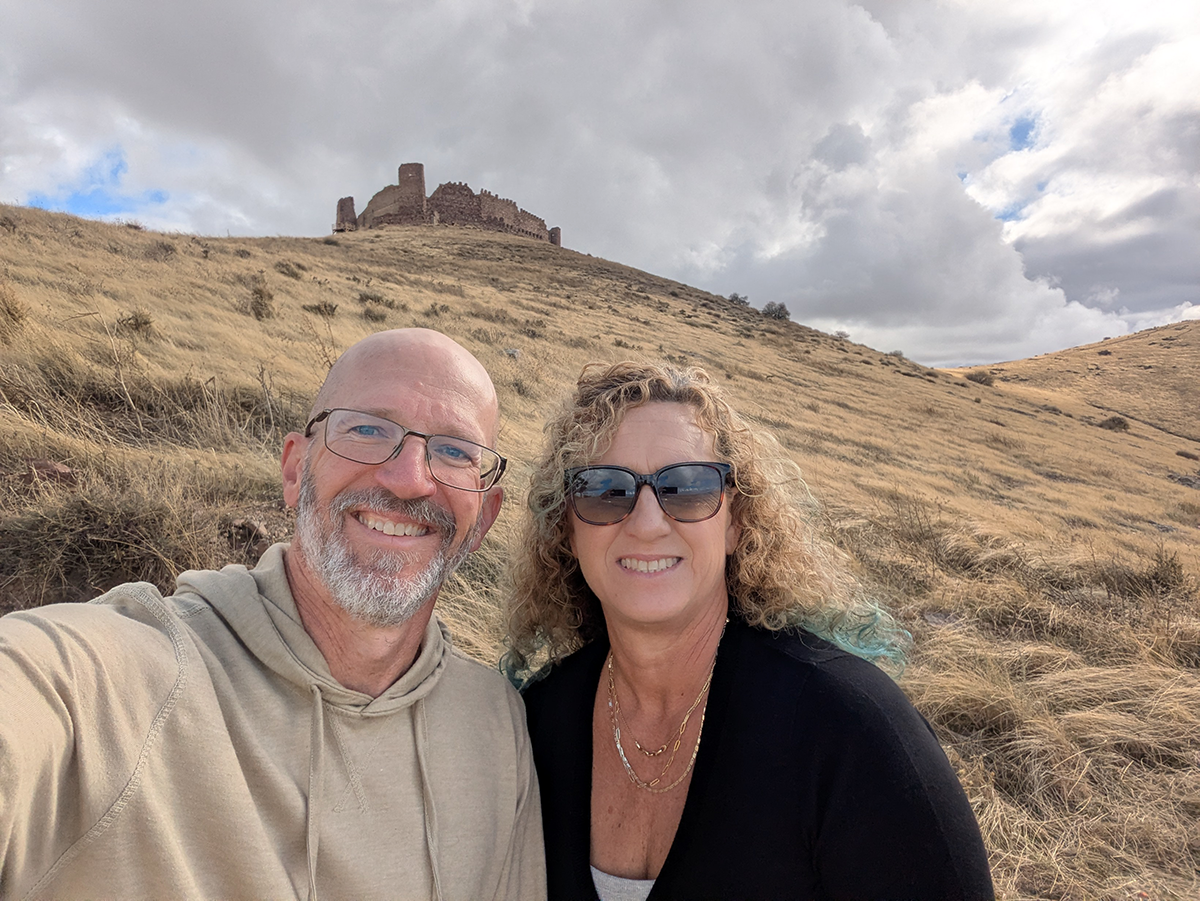
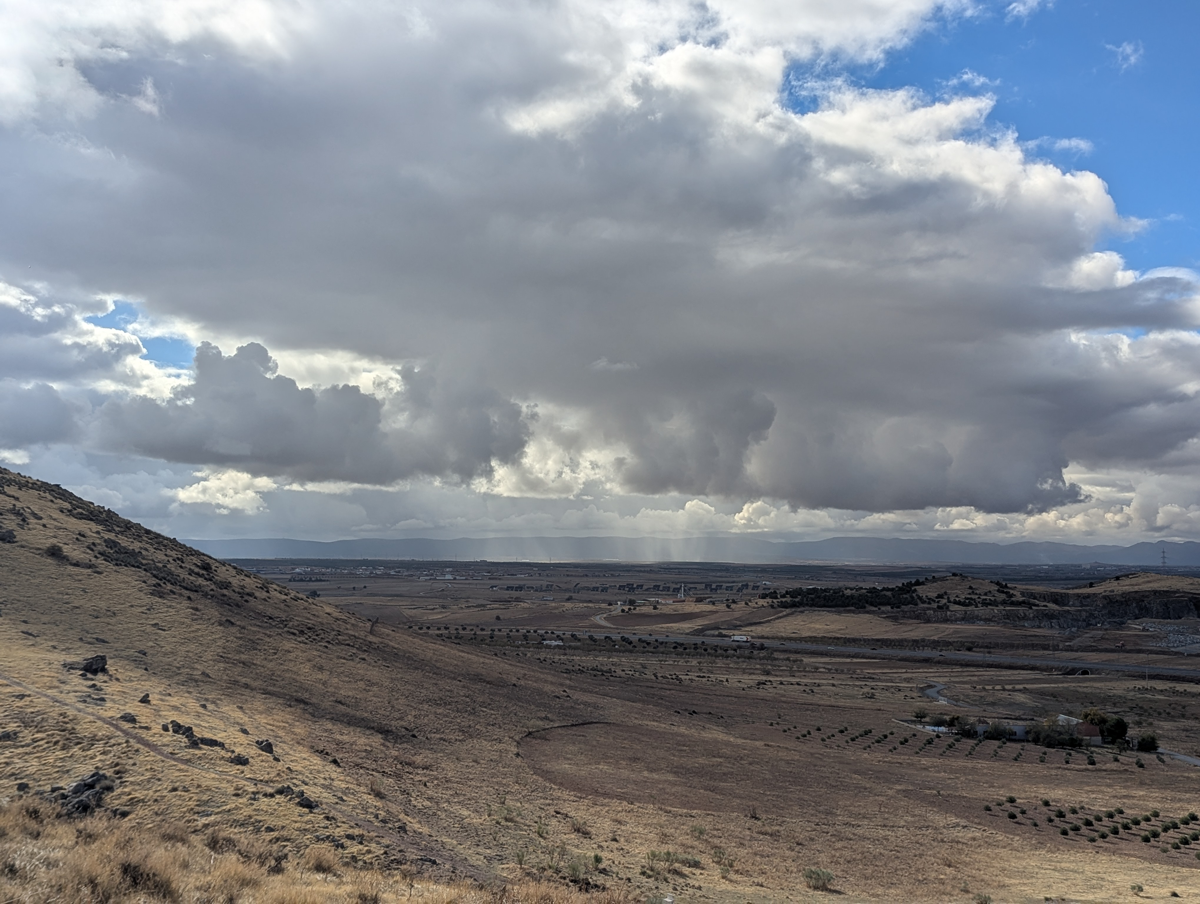
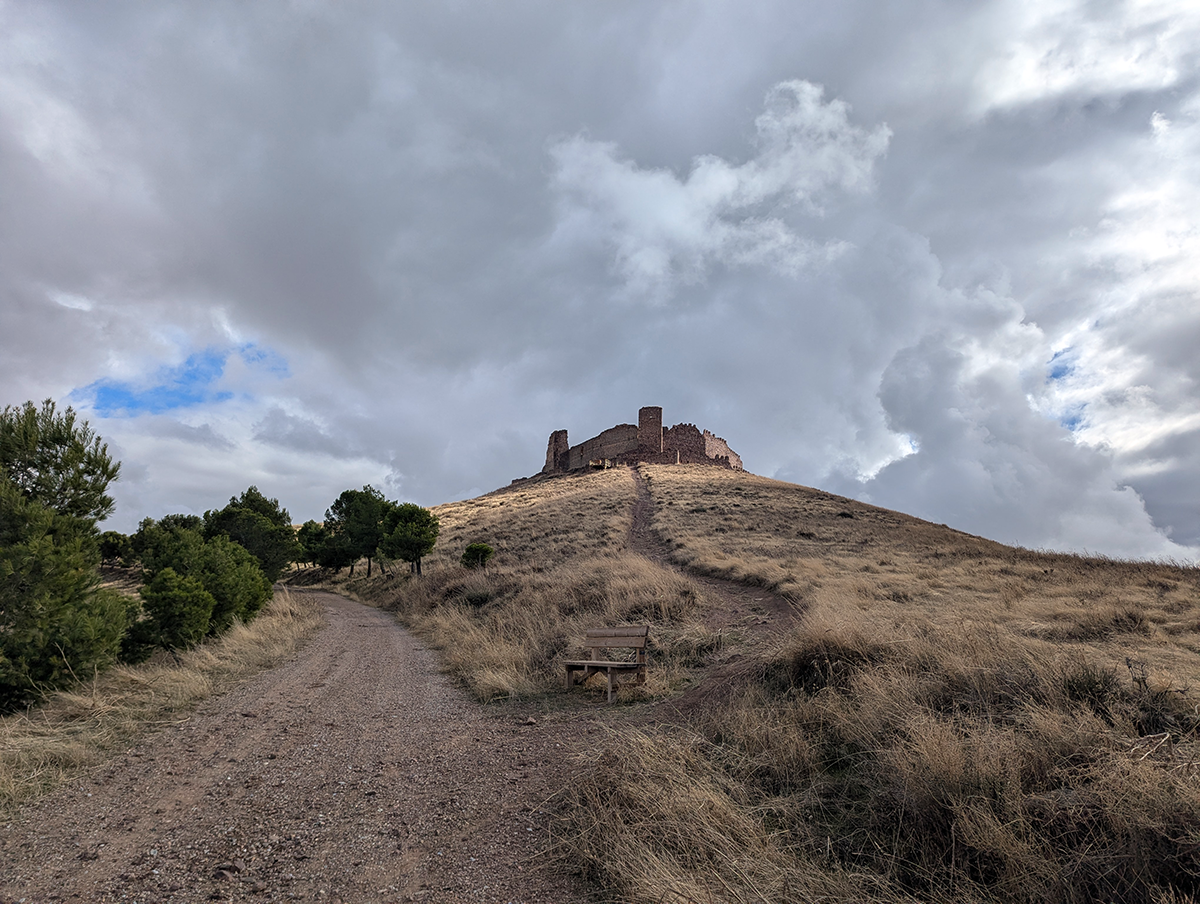
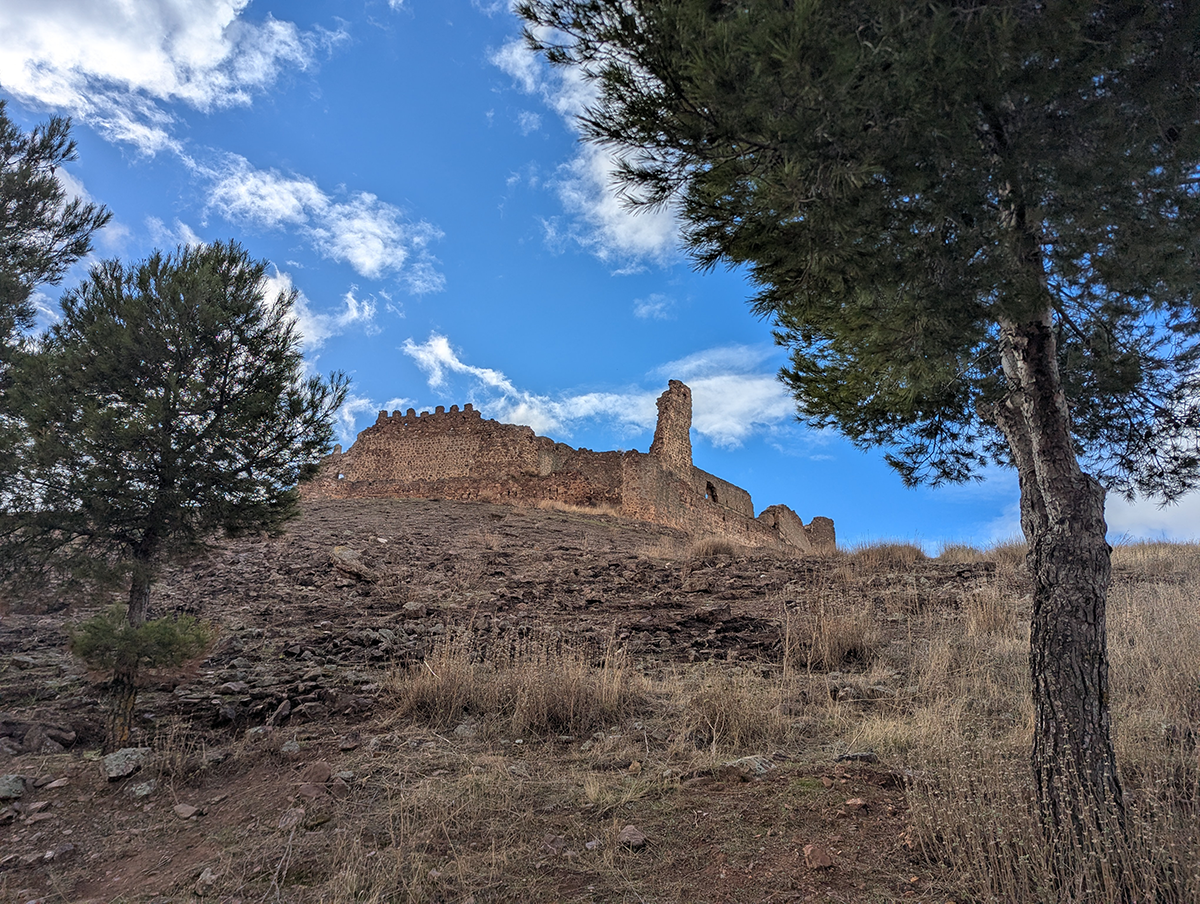
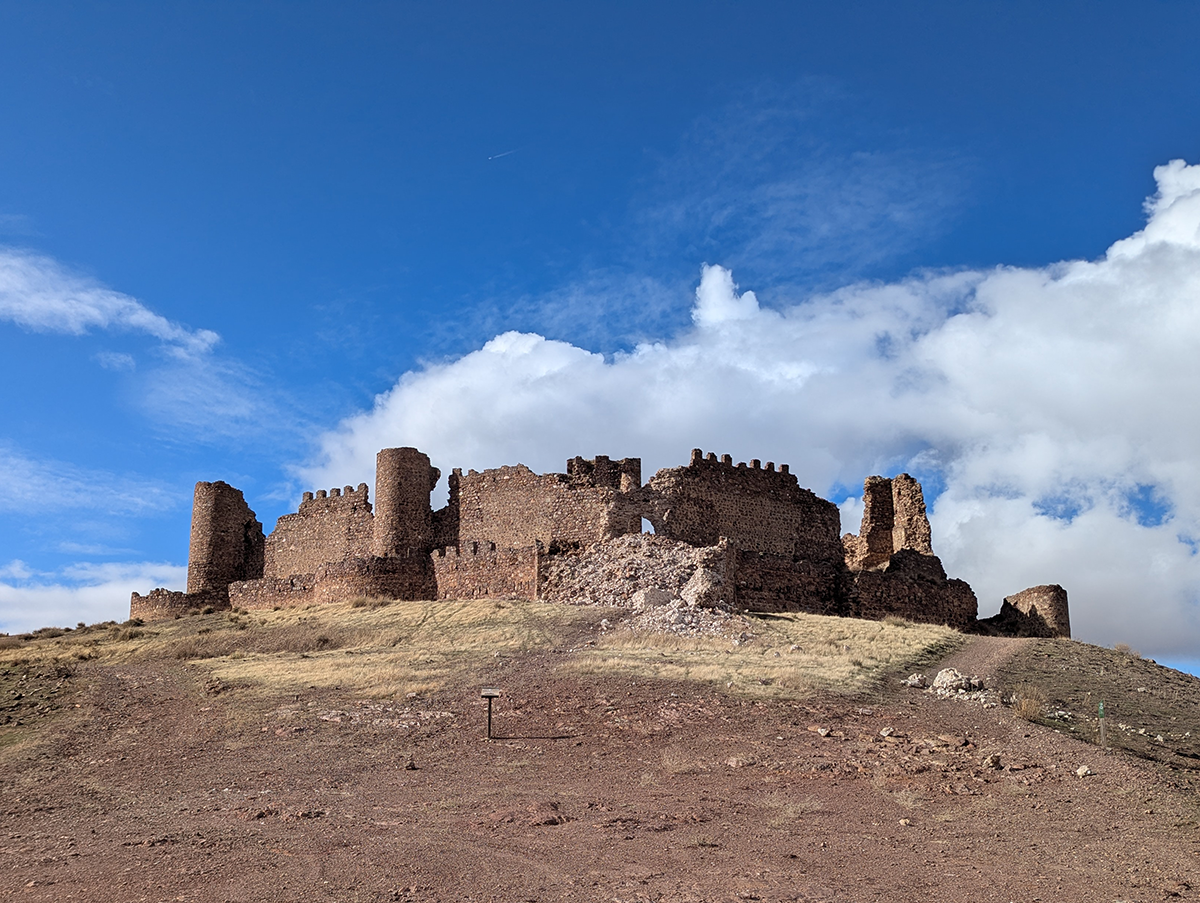
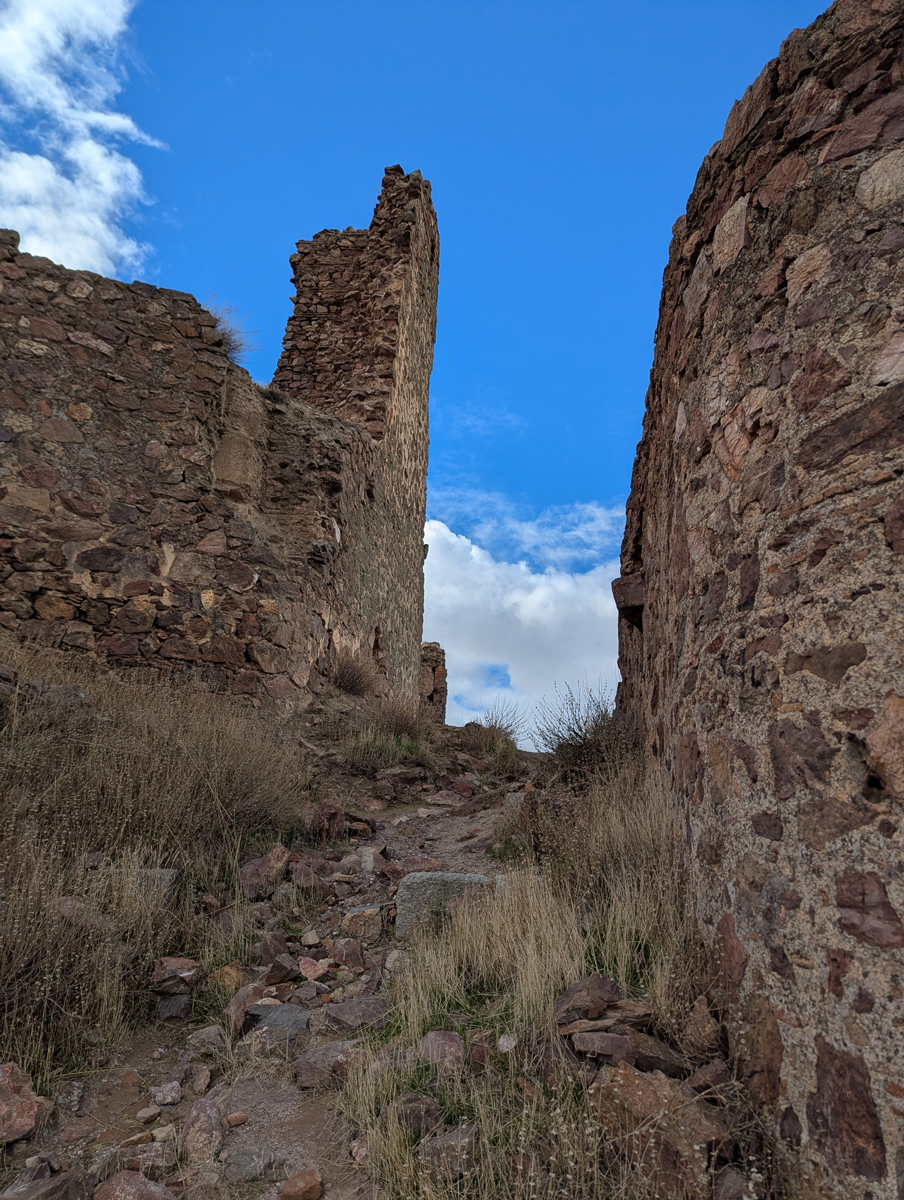
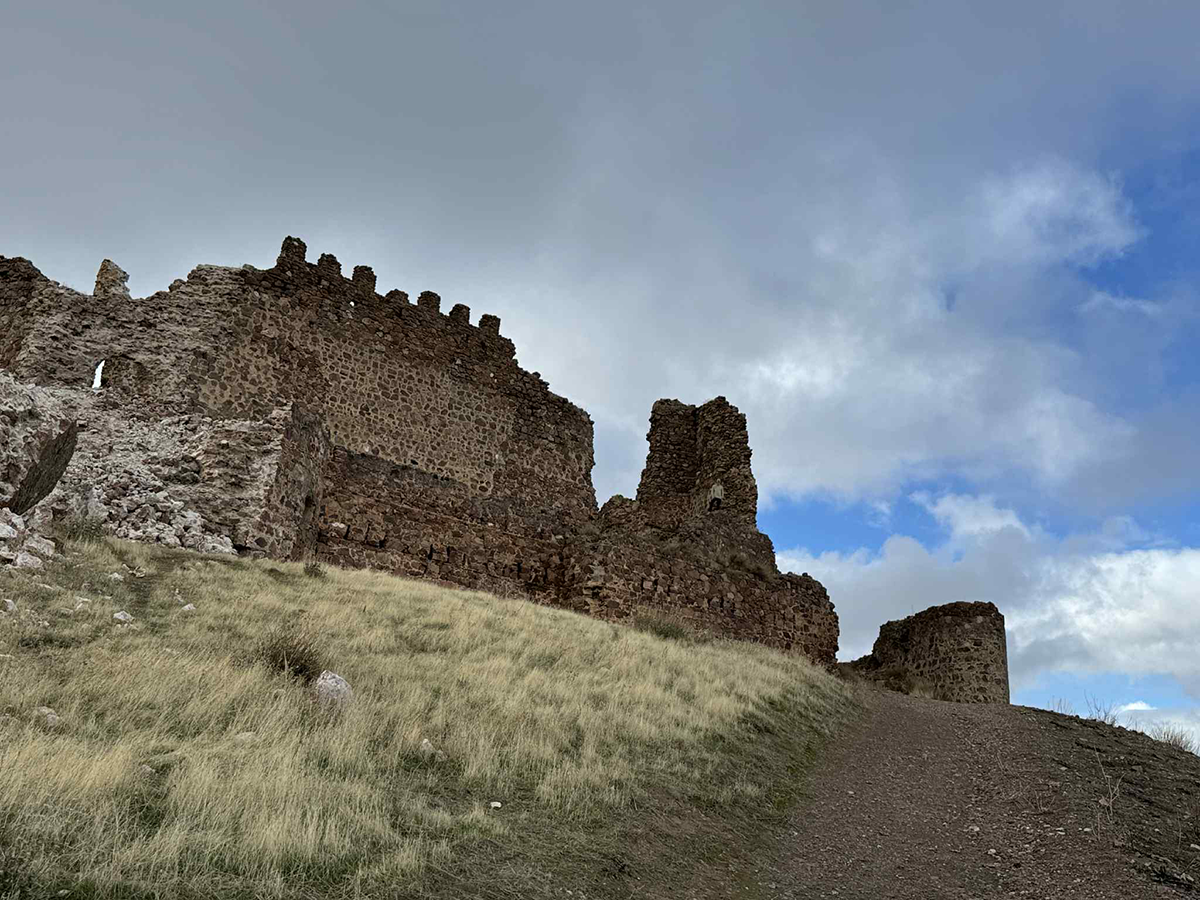
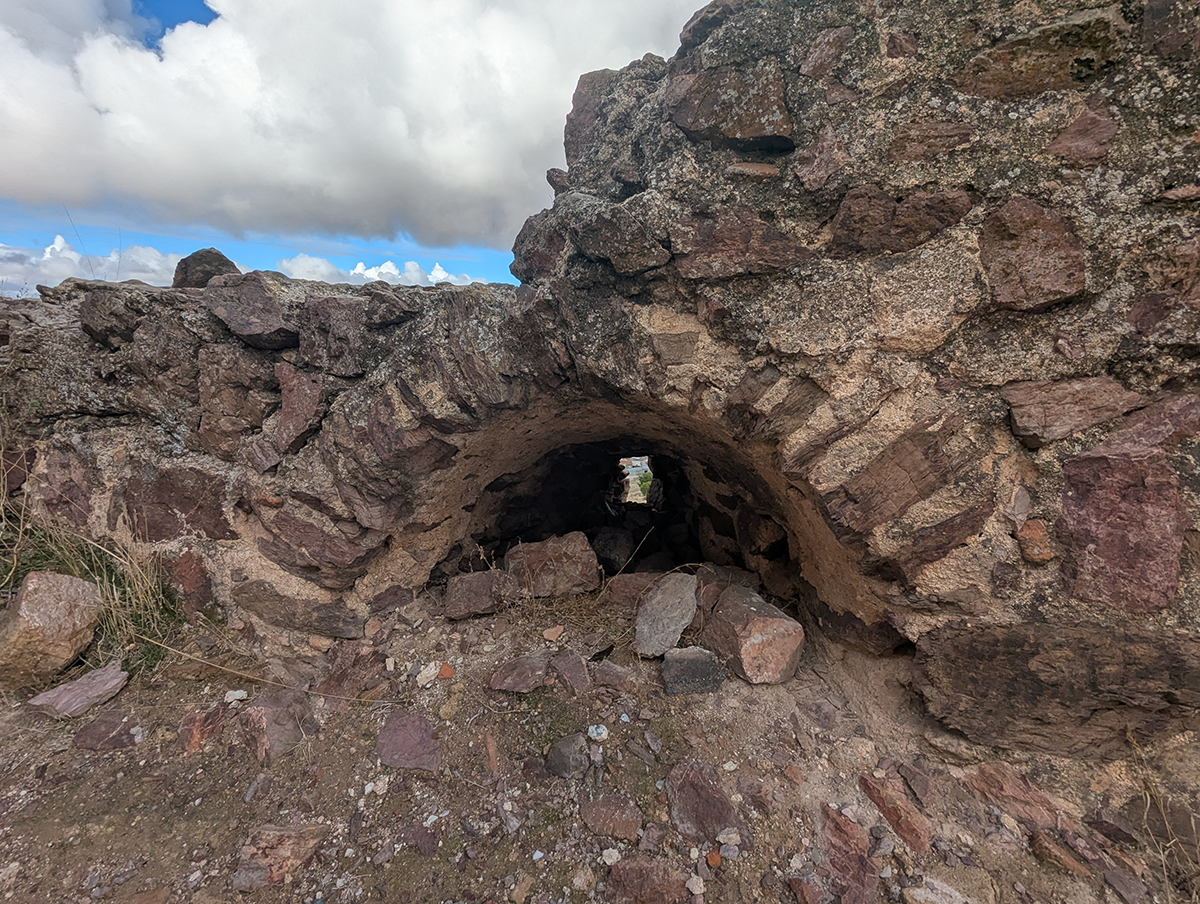
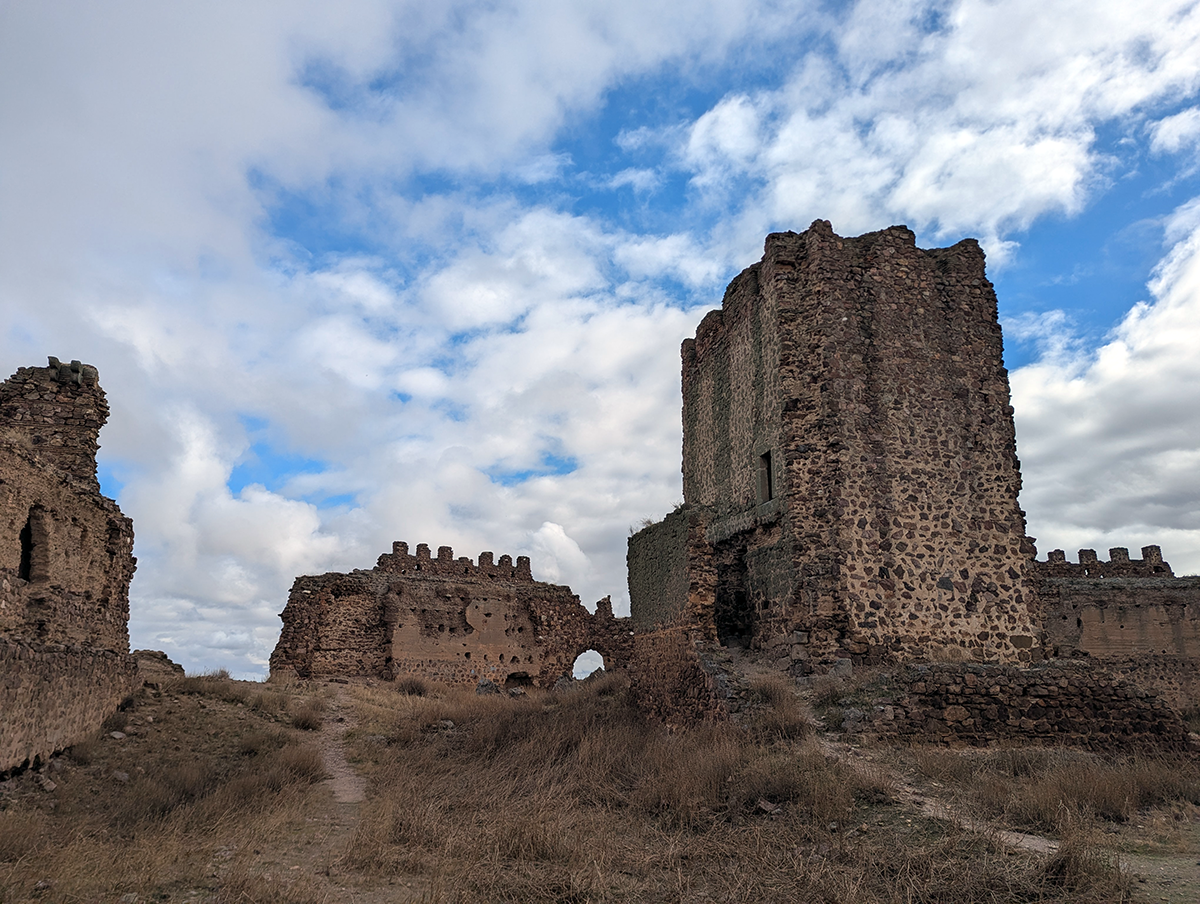
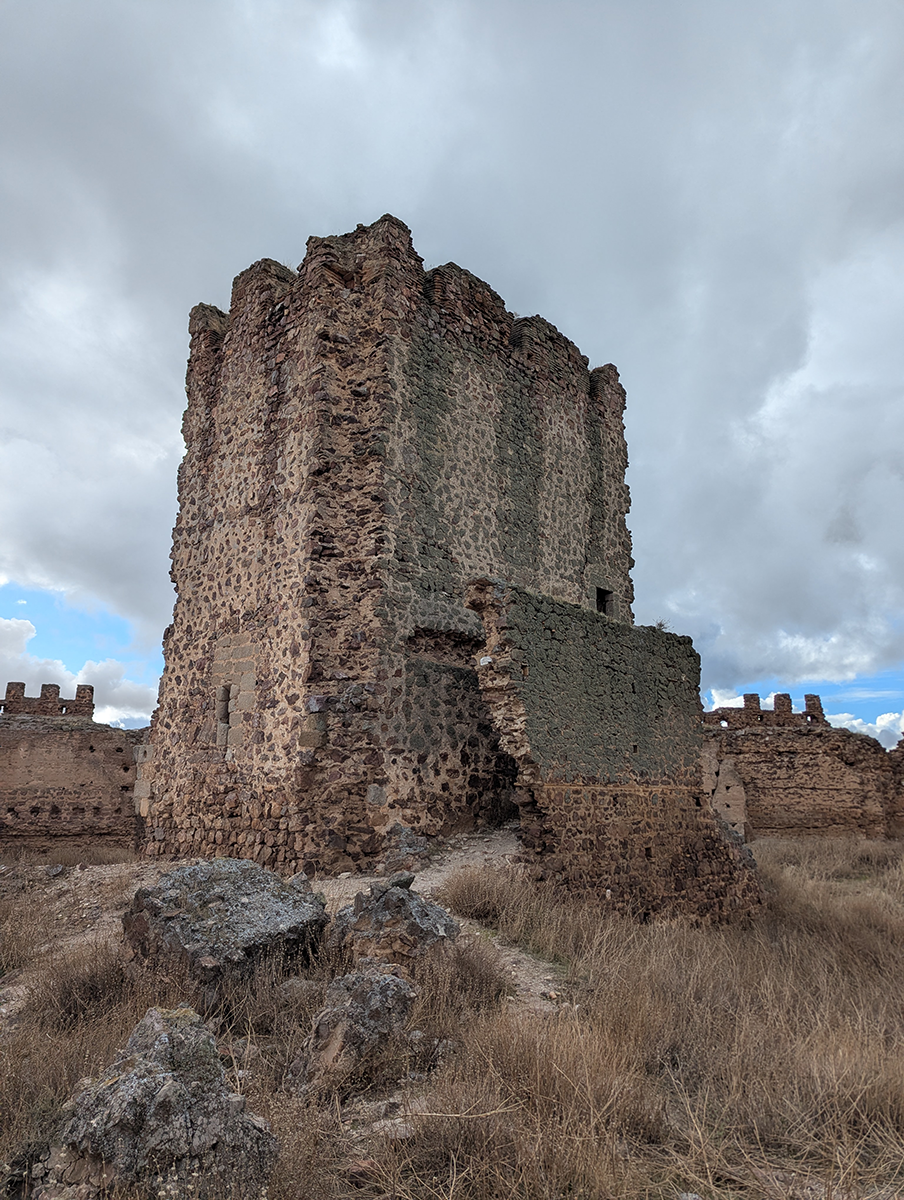
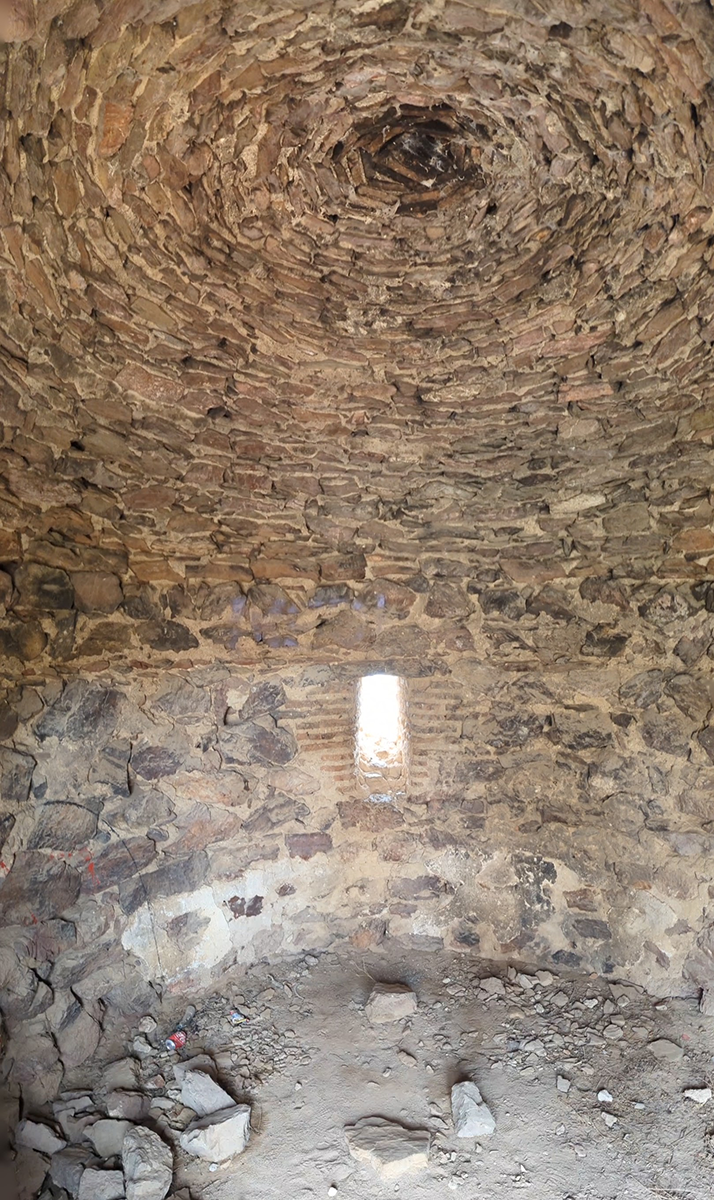
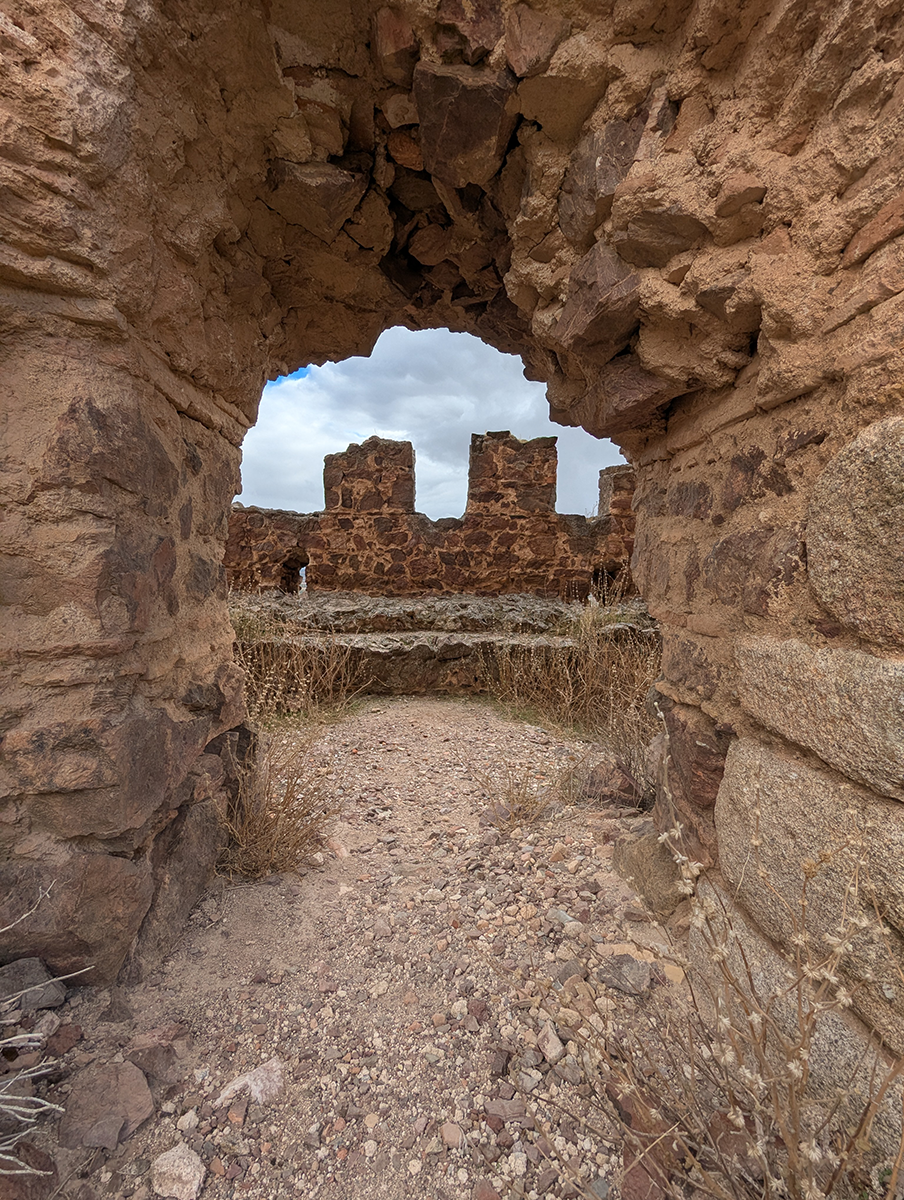
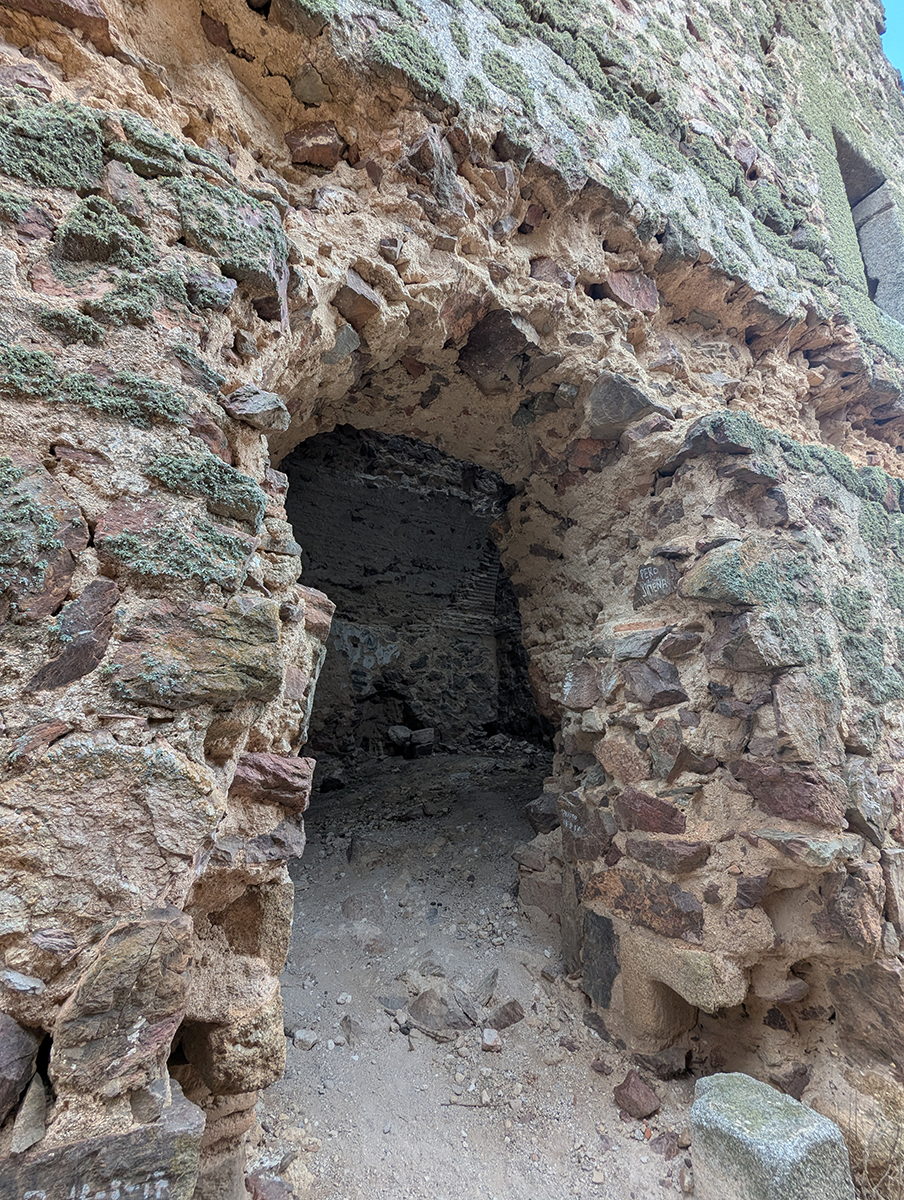
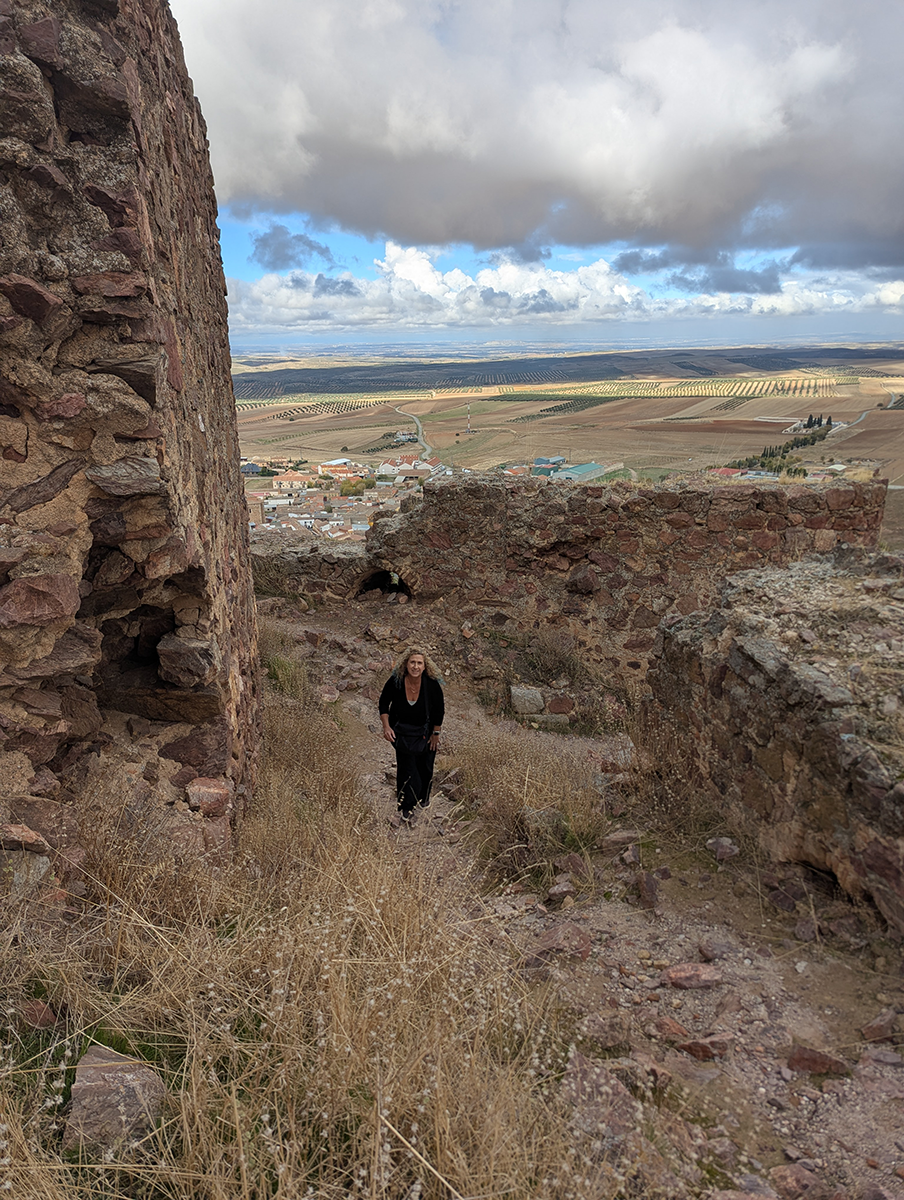
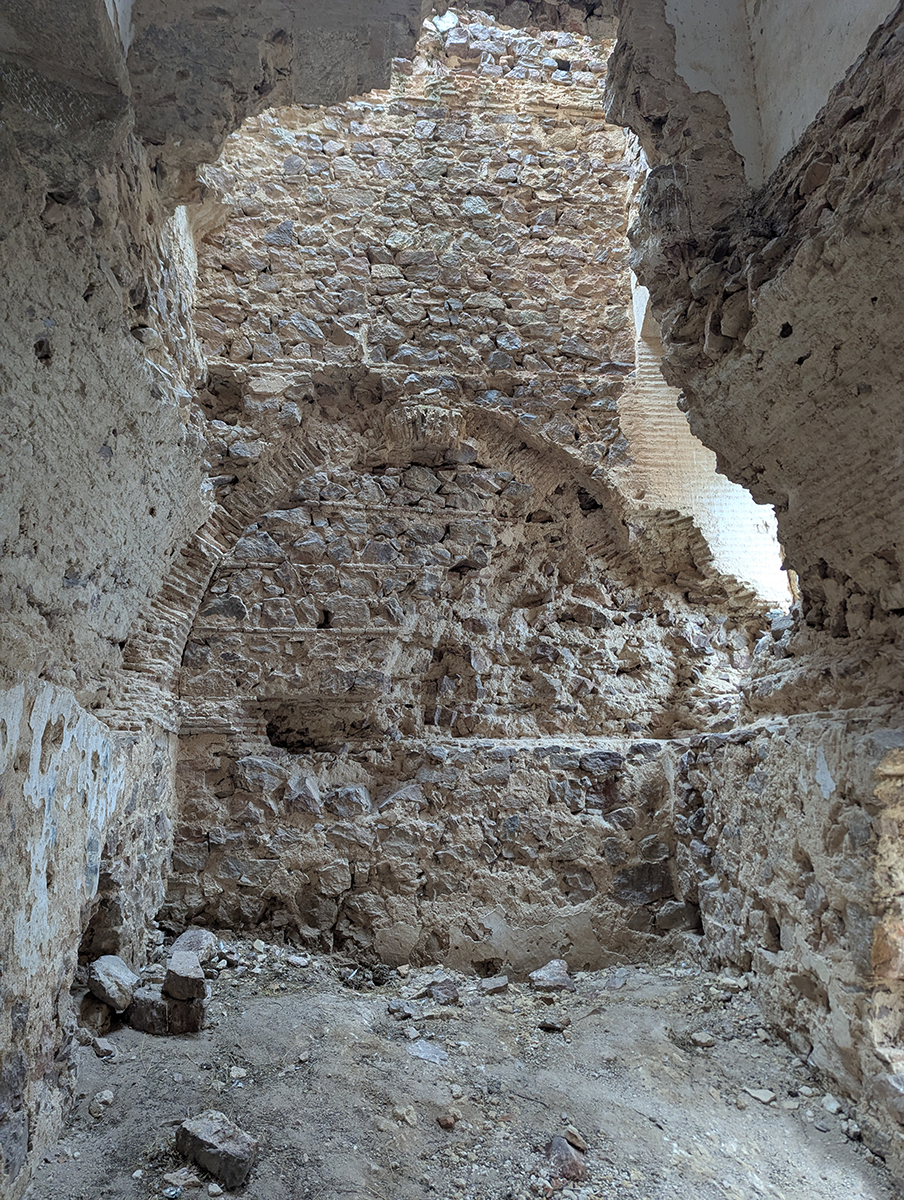
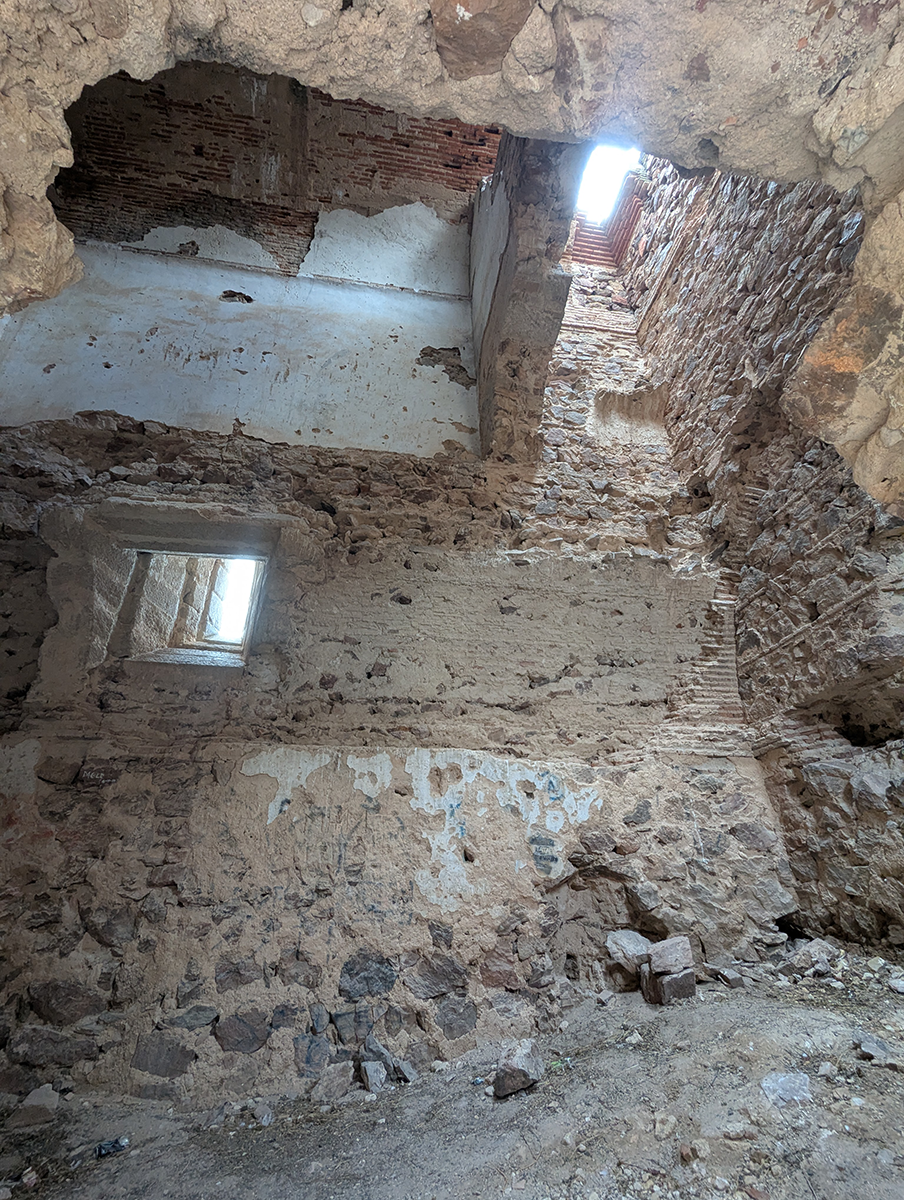
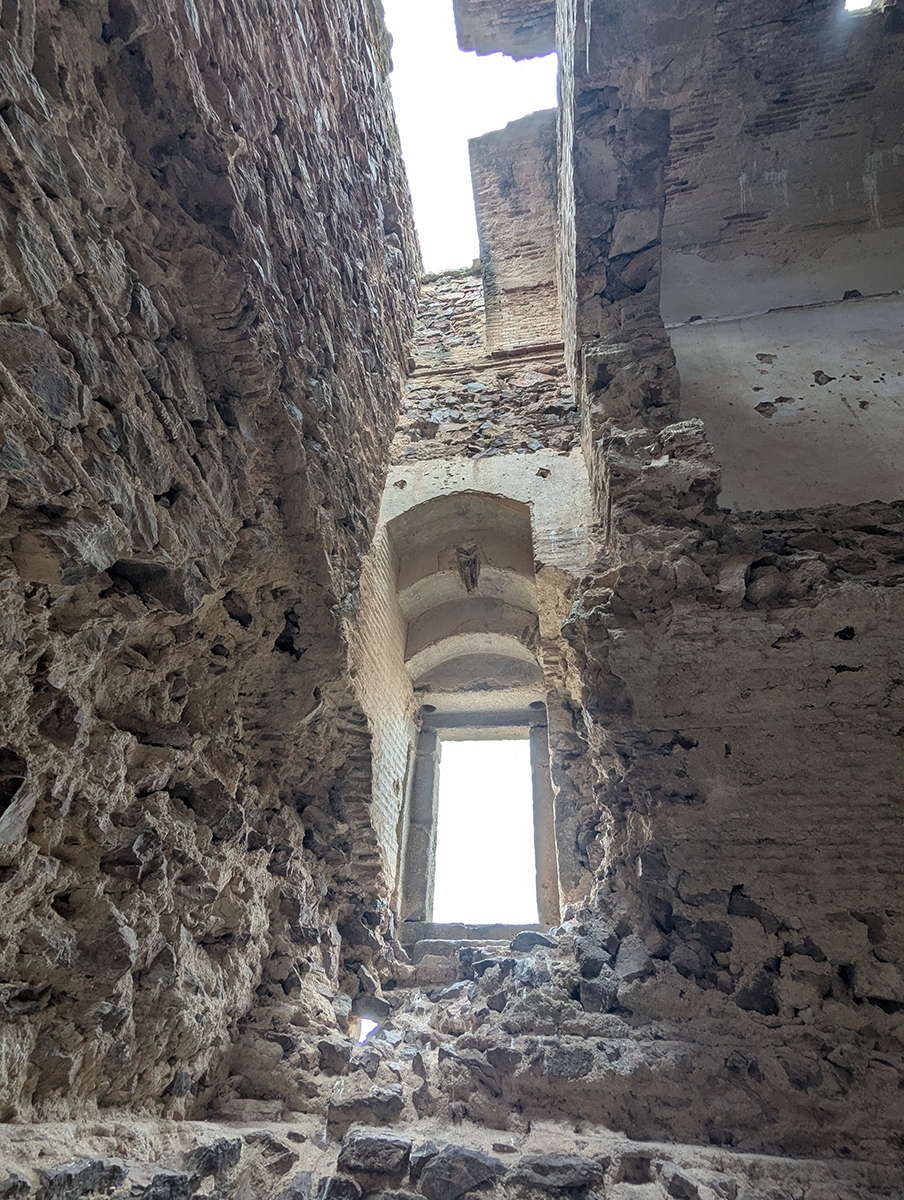
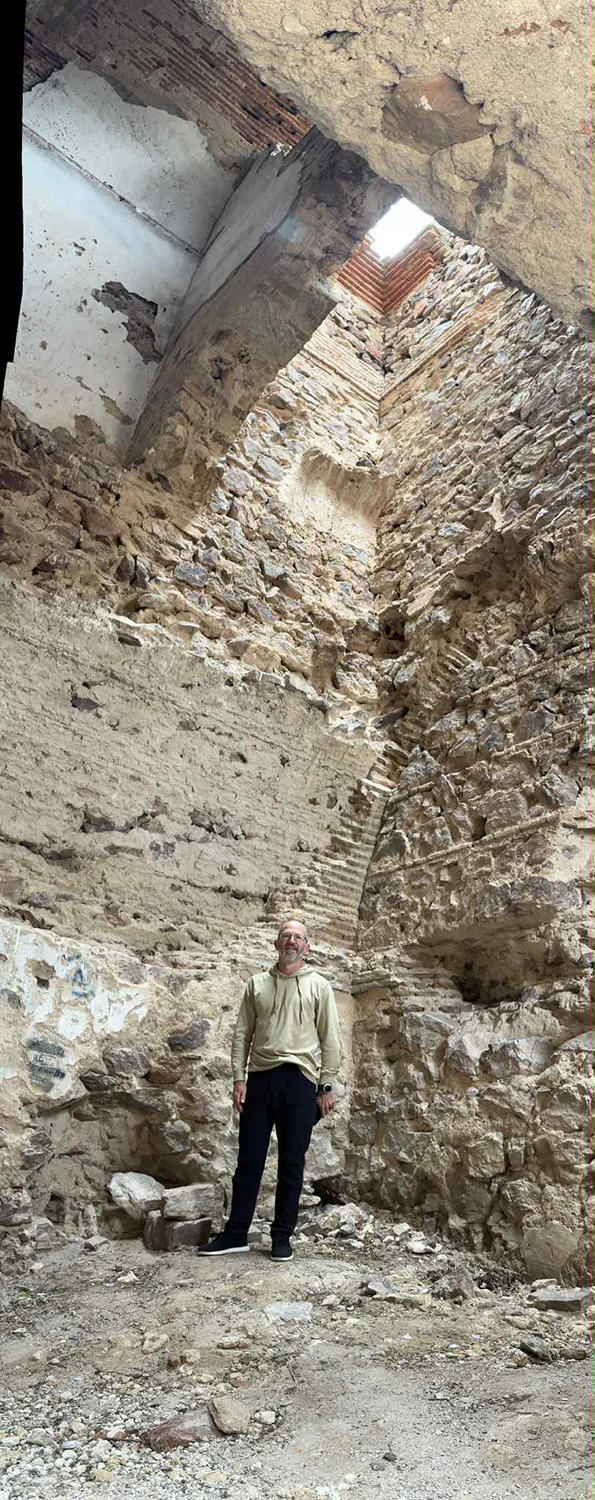
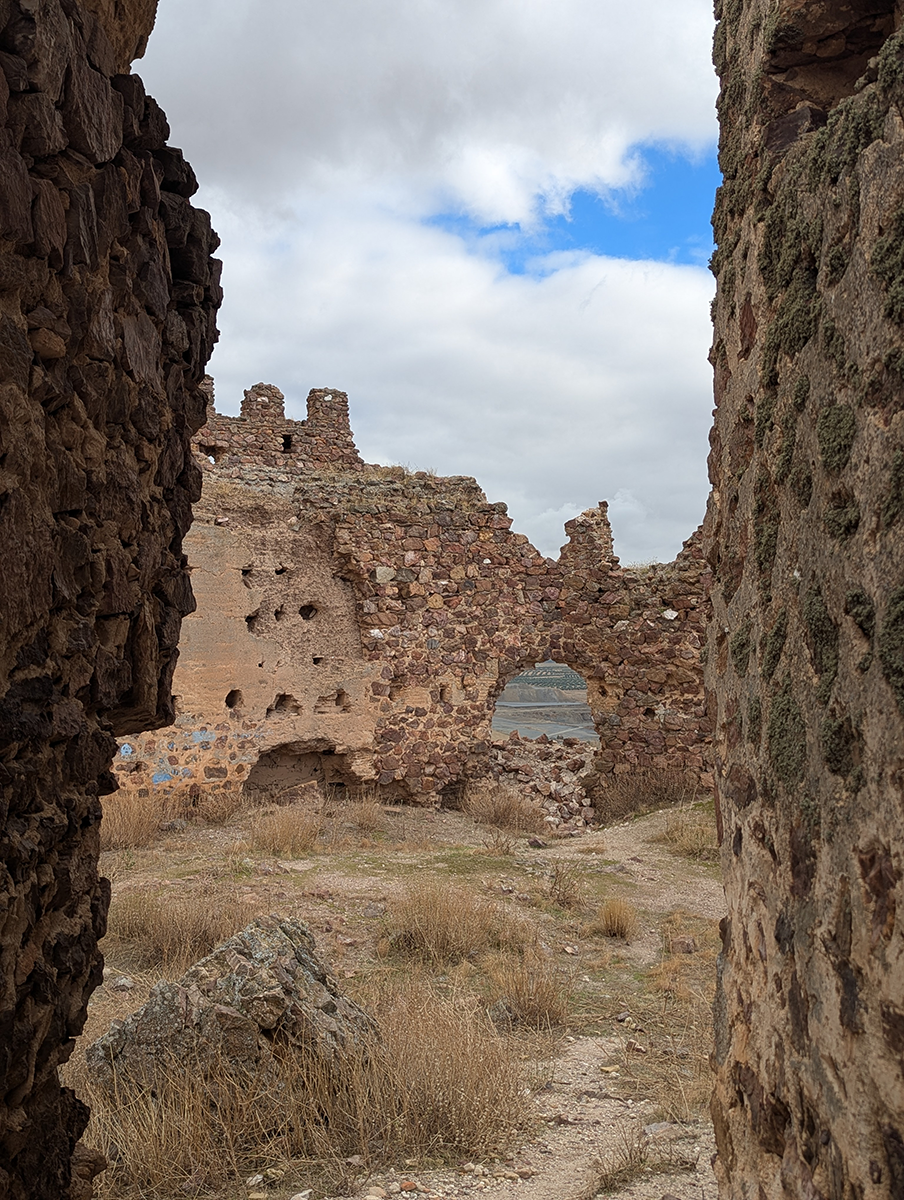
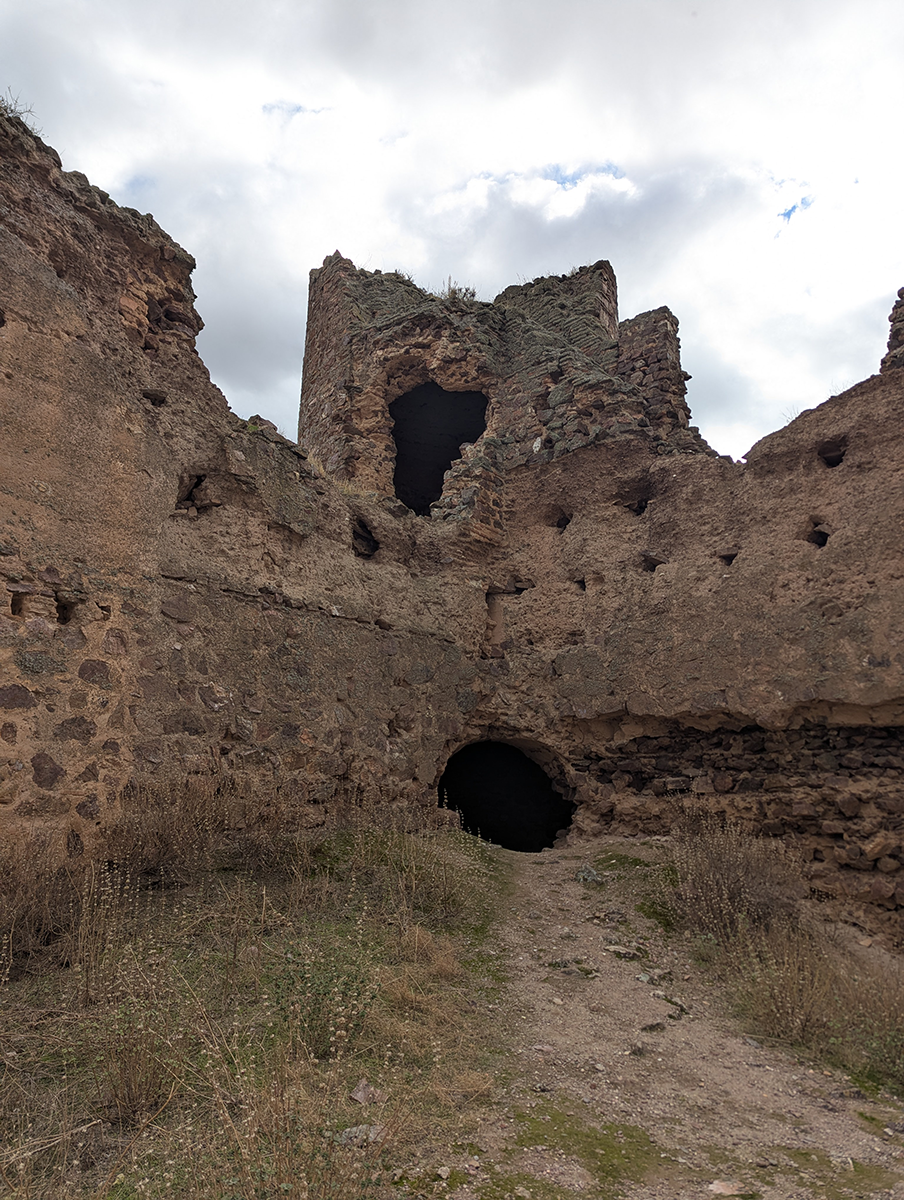
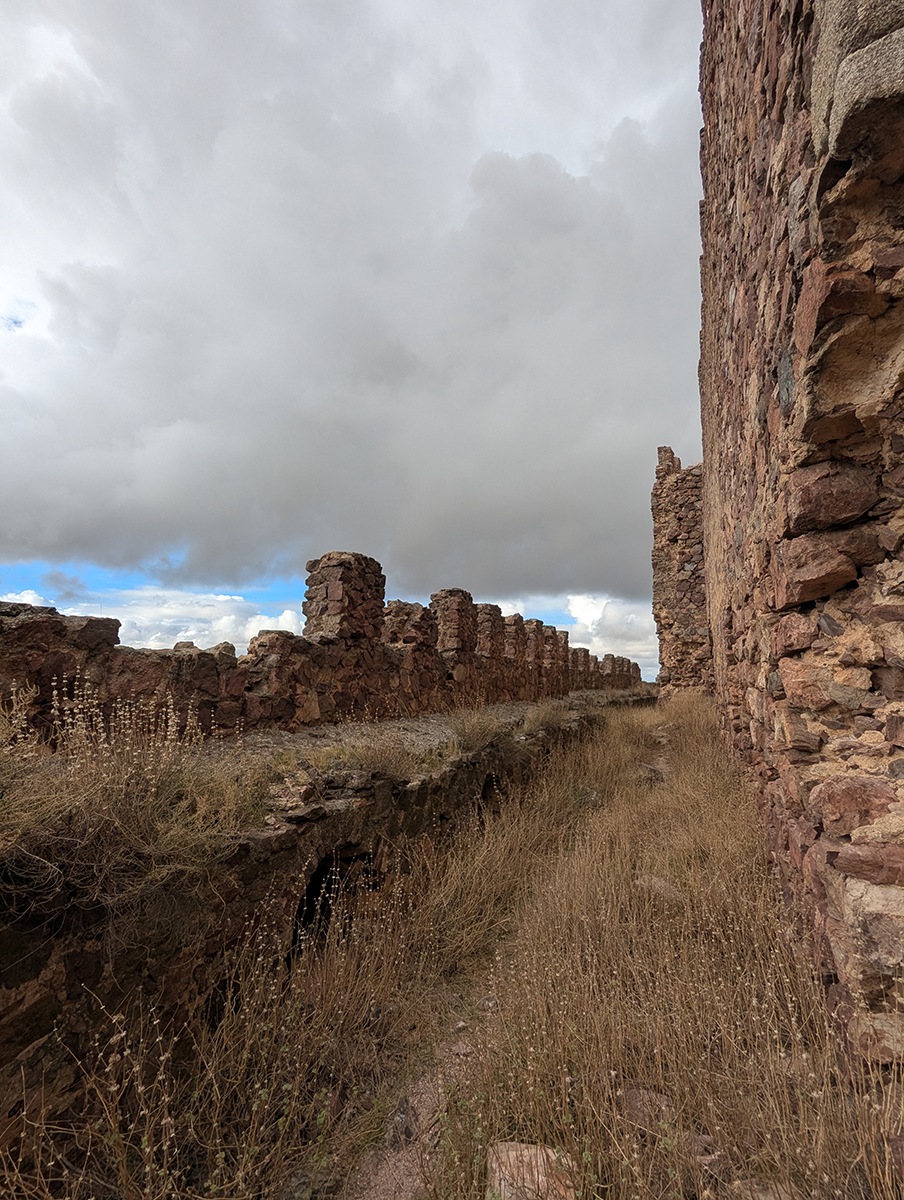
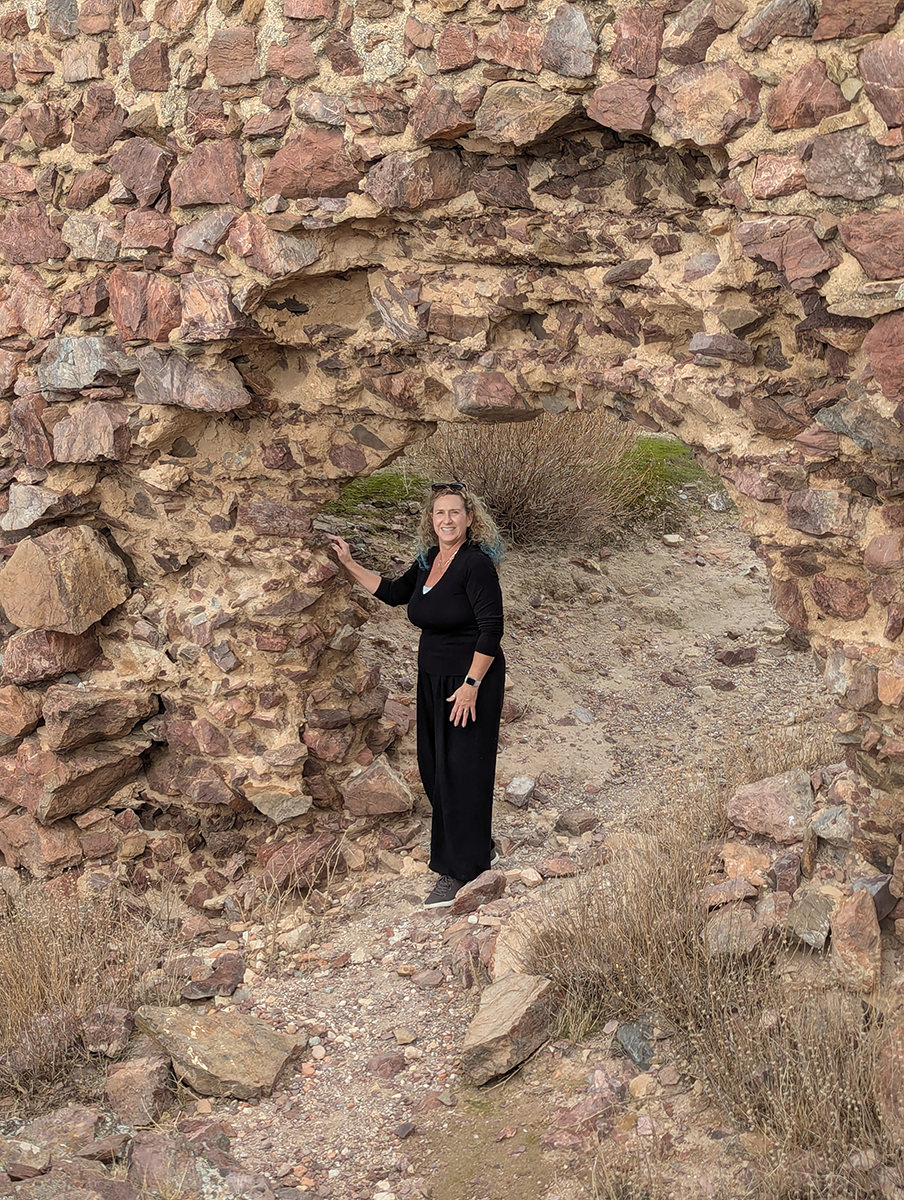
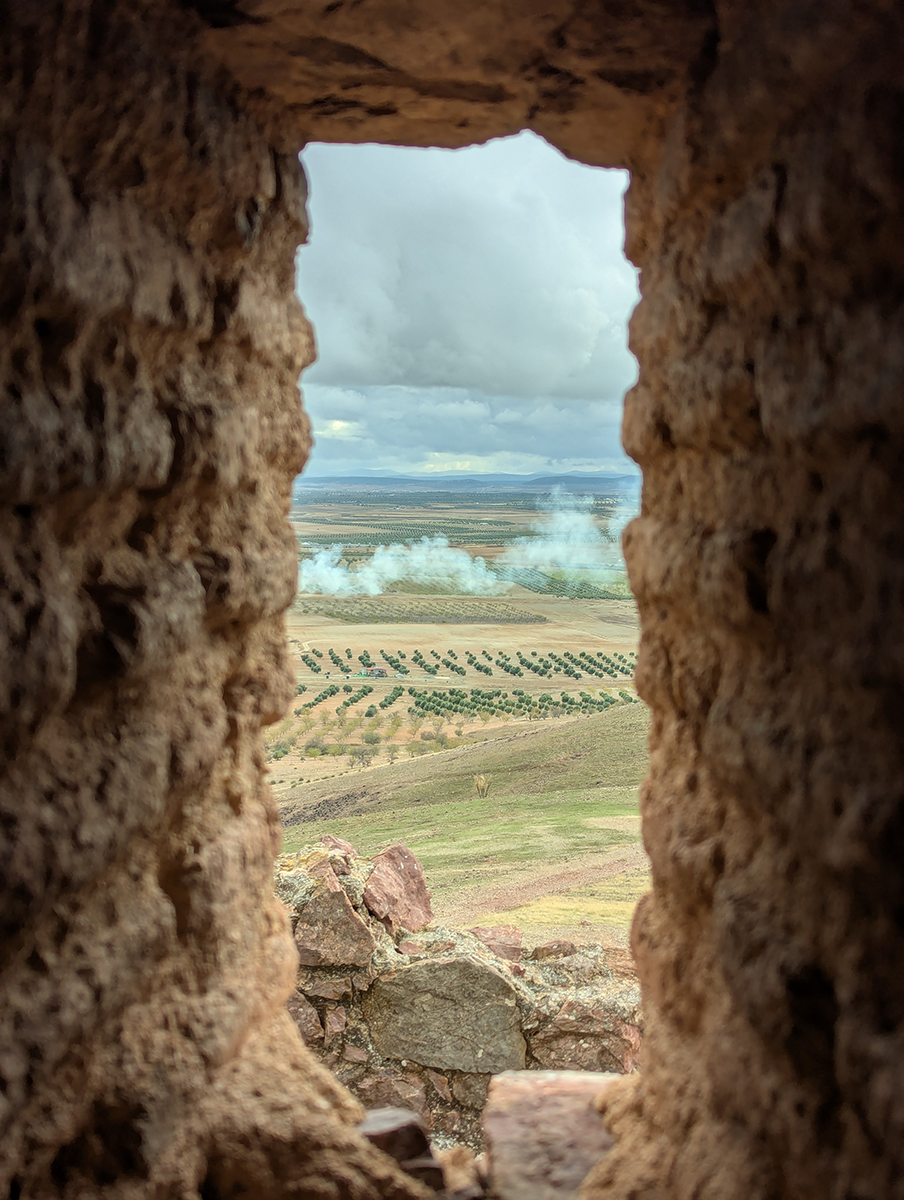
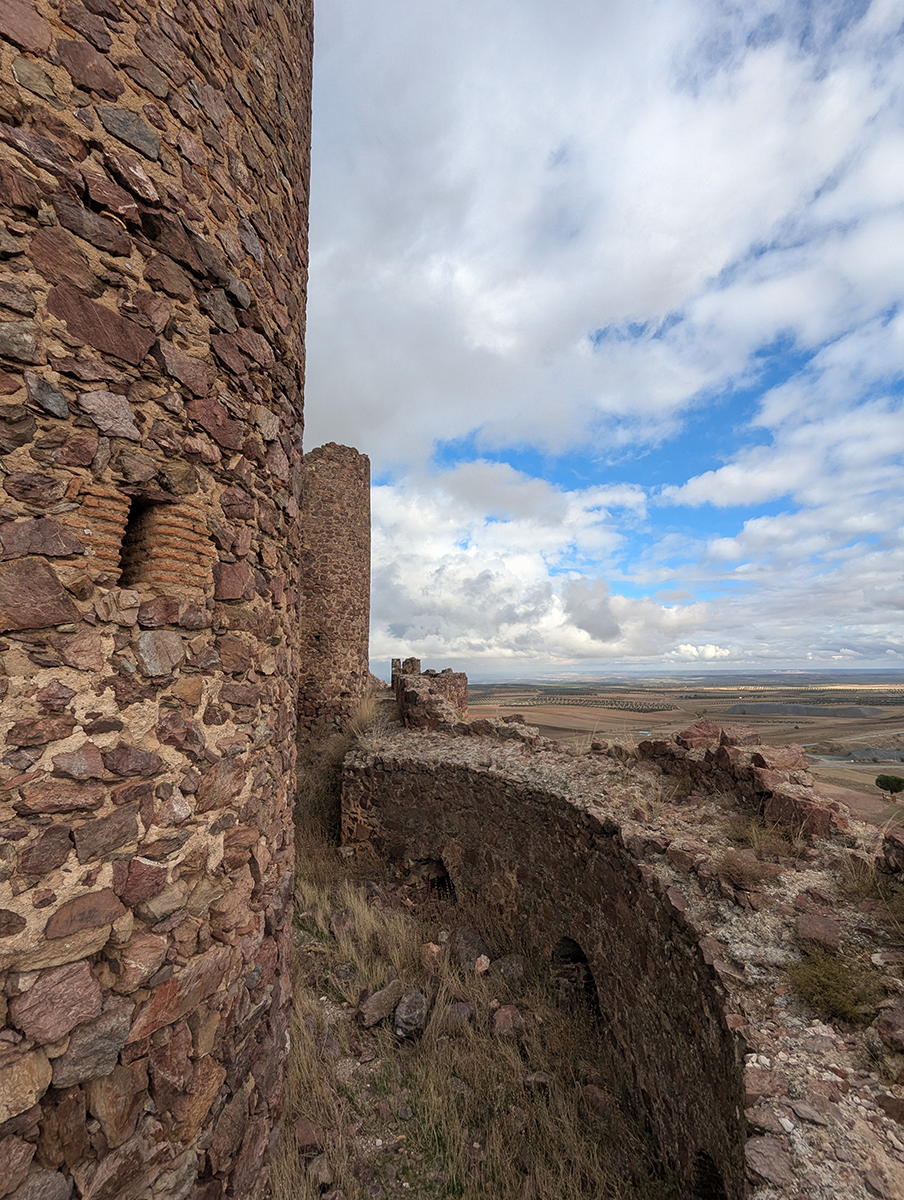
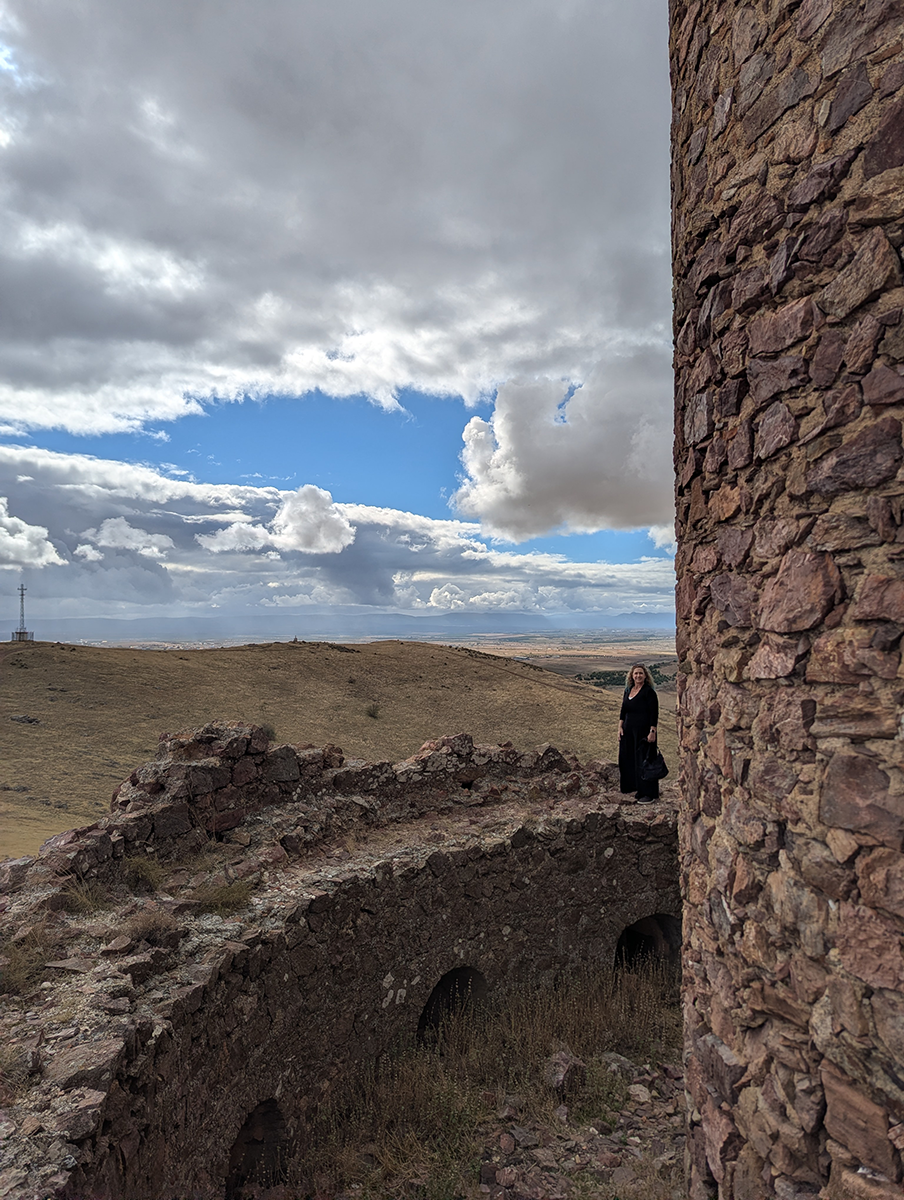
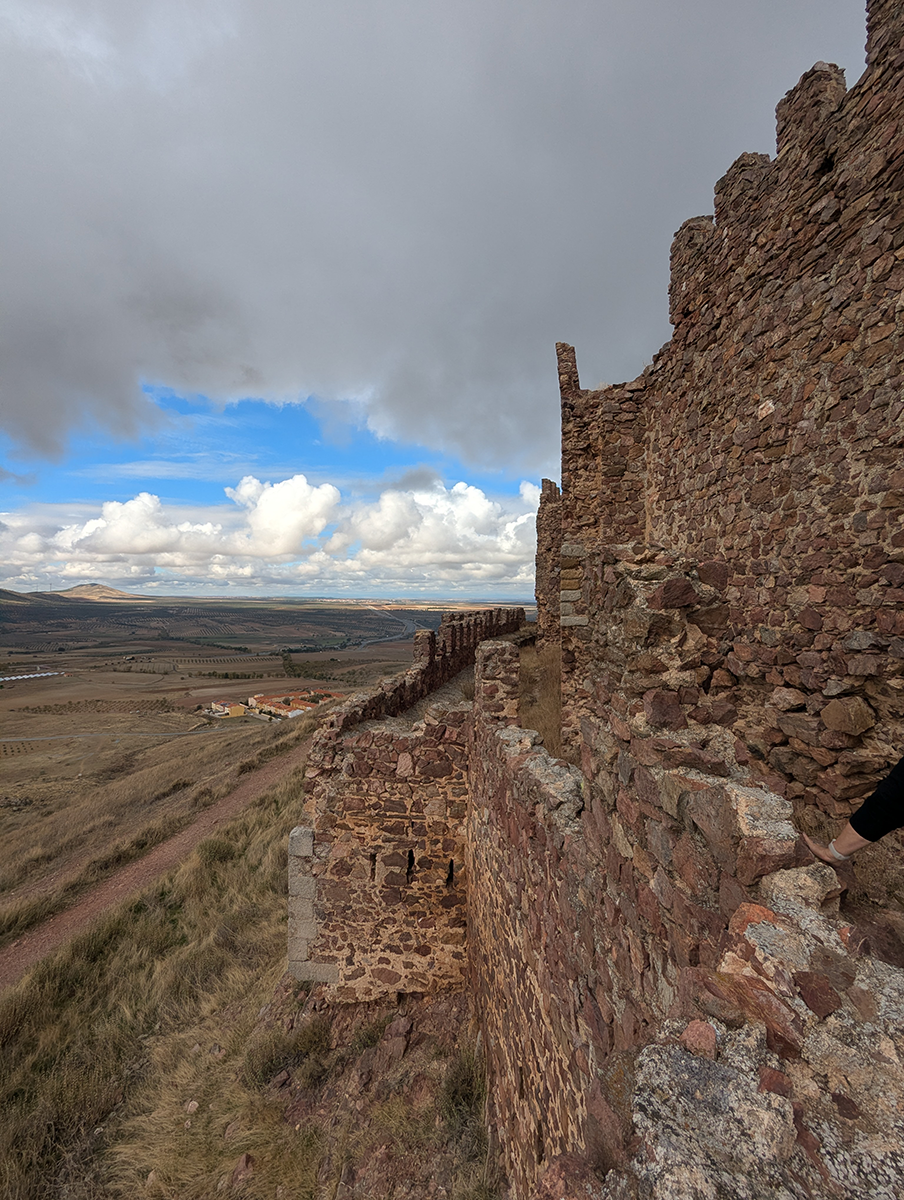
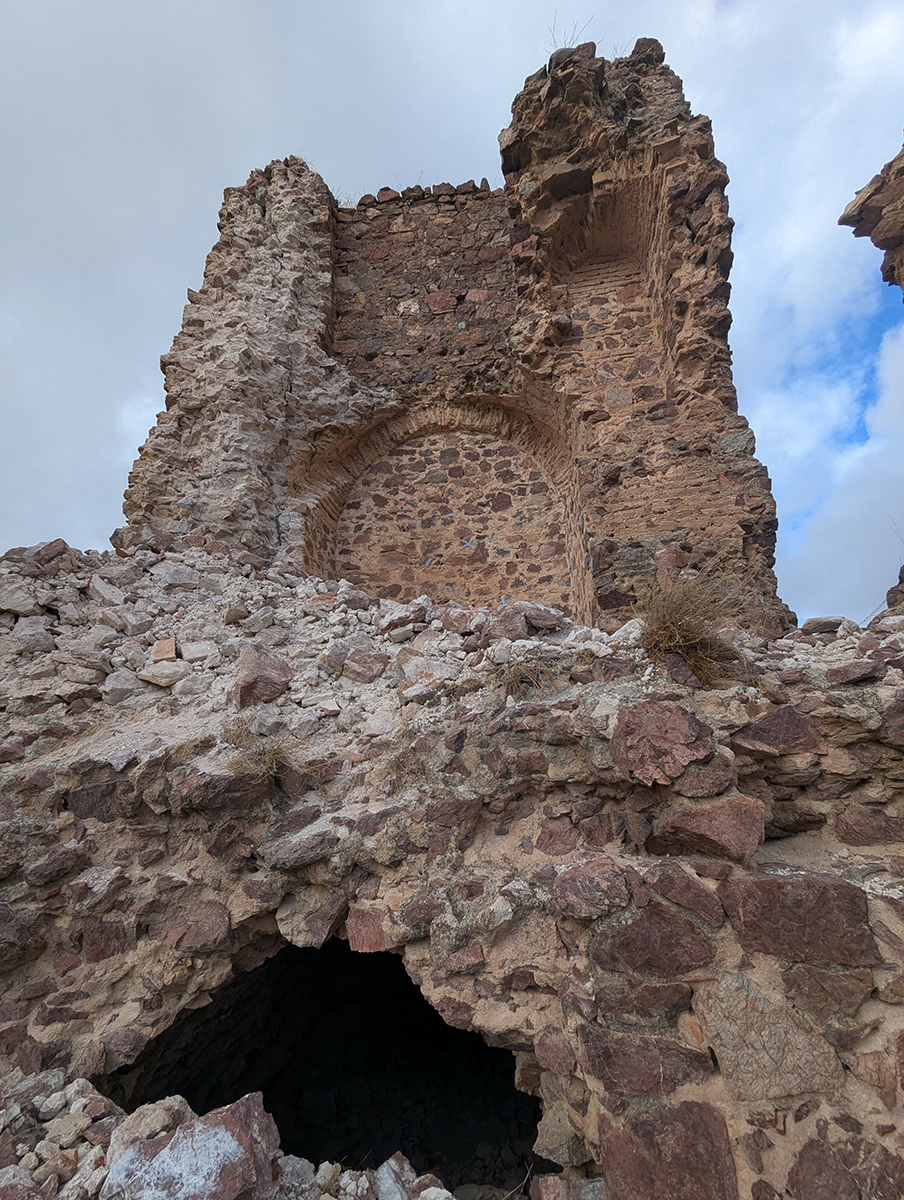
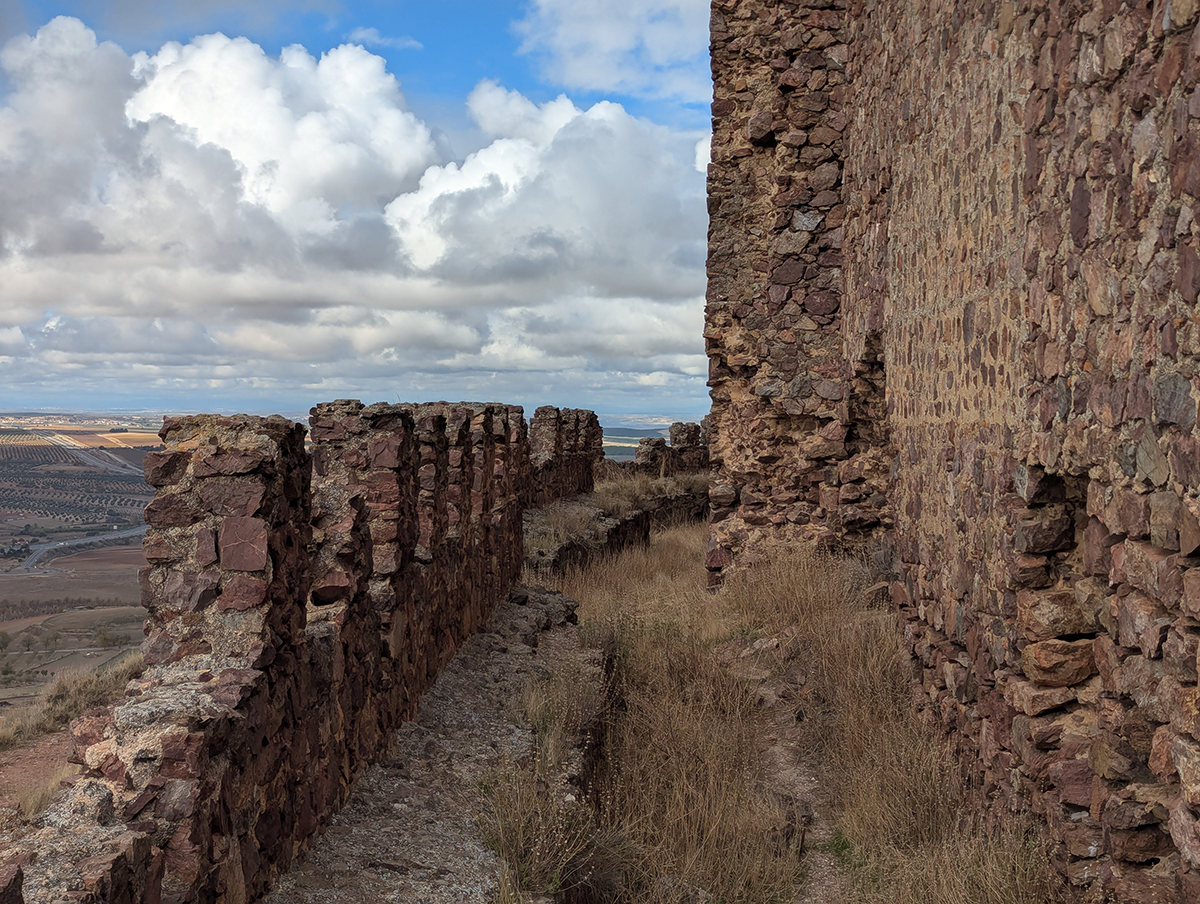
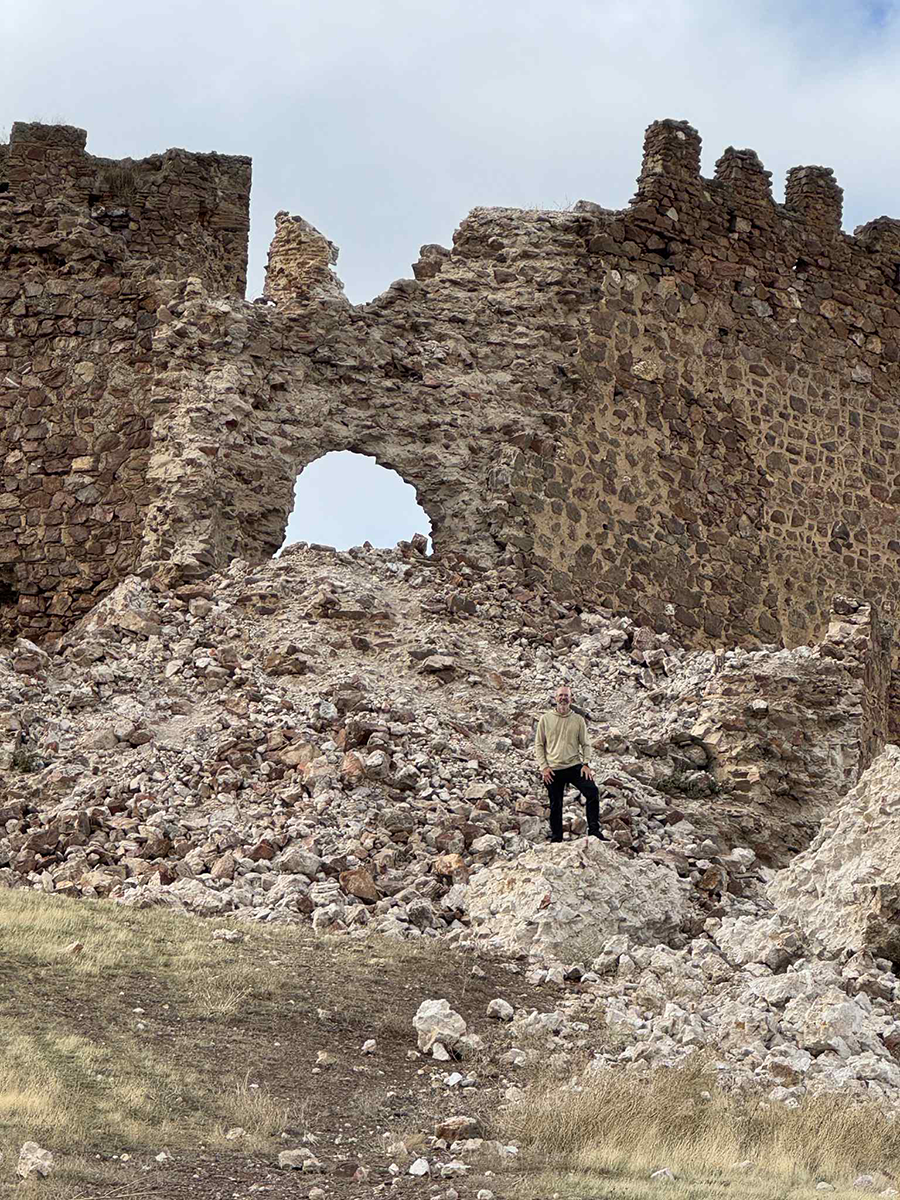
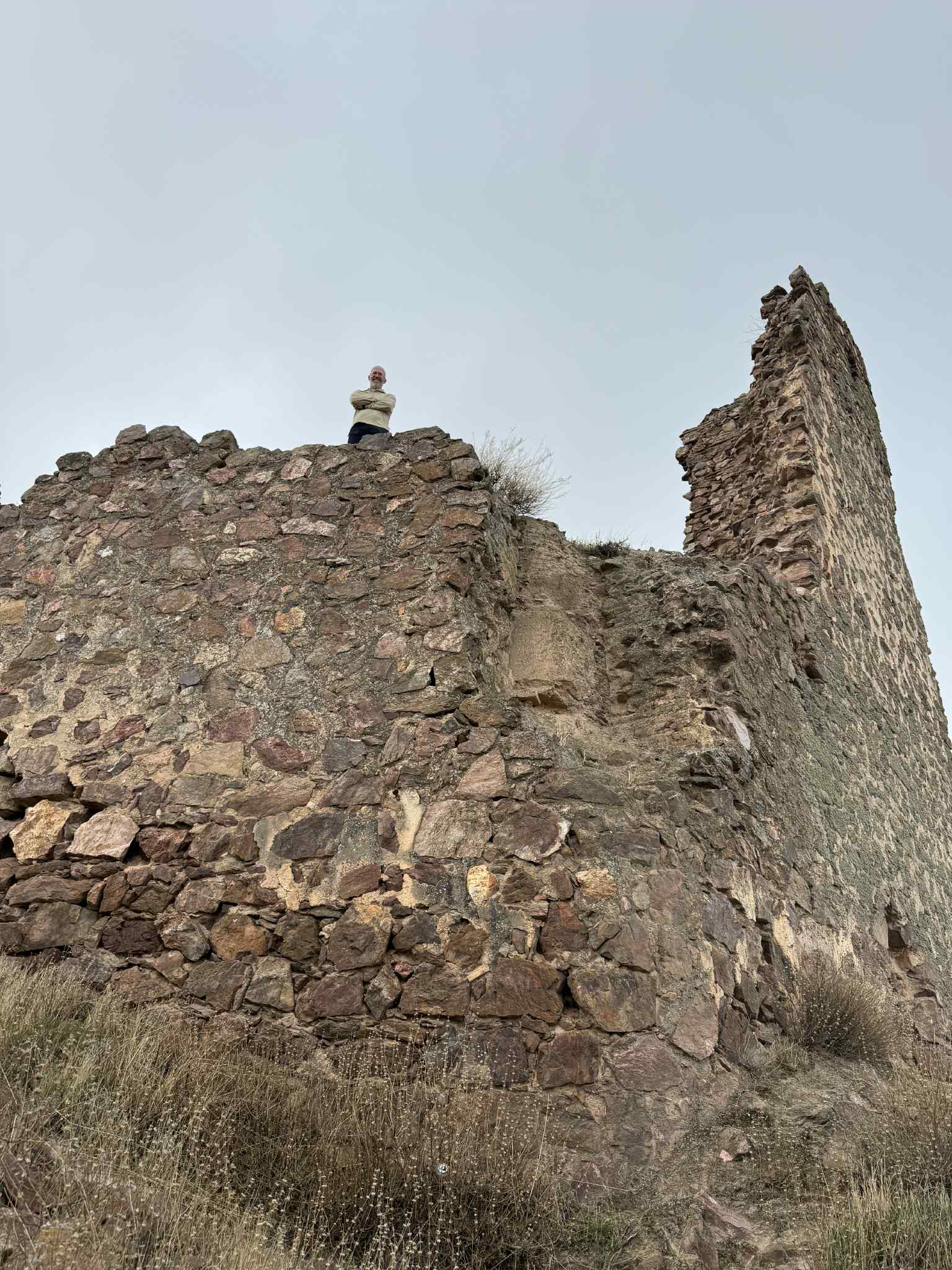
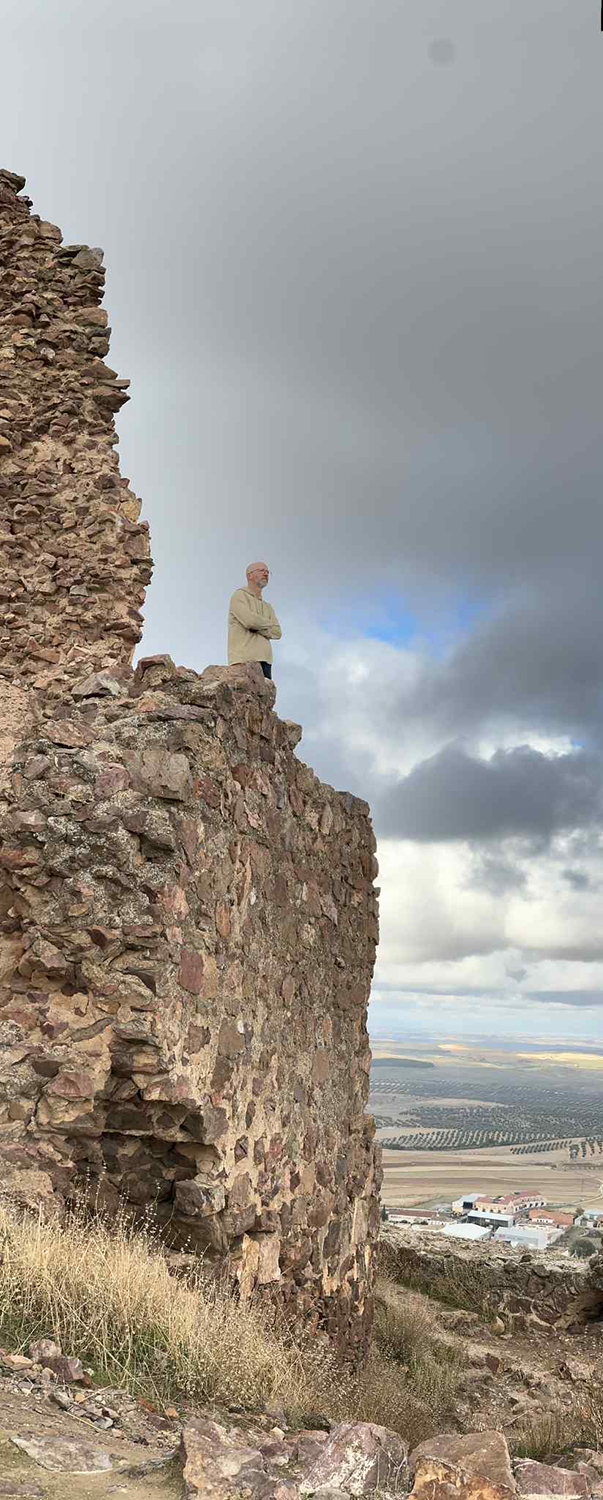
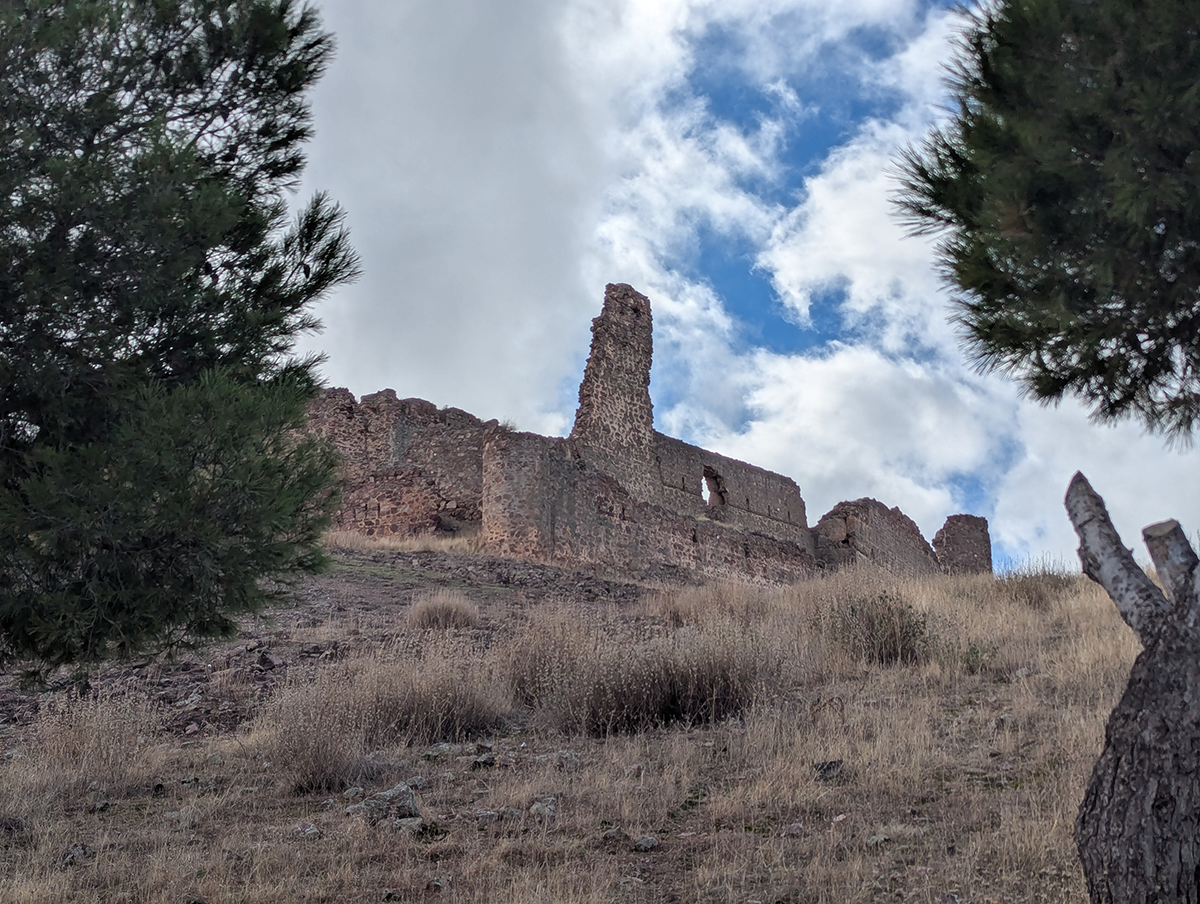
Later, we got more information about what we’d seen. Originally built by the Moors, Castillo de Almonacid de Toledo saw its first mention in history around 848. Ownership later passed to King Alfonso IV (as part of his wife’s dowry) and he eventually donated the castle to the archbishop of Toledo in 1086. In 1809, Almonacid castle helped shelter Spanish troops during a battle against the French during the Peninsular War. It’s been presiding over those fields for over 1,200 years.
And … we got to spend part of an afternoon exploring it in 2025. How cool is that?
Here are a few panoramas I took of the castle (both inside and out):